
C-BOS
Close-Quarters Blast Overpressure System
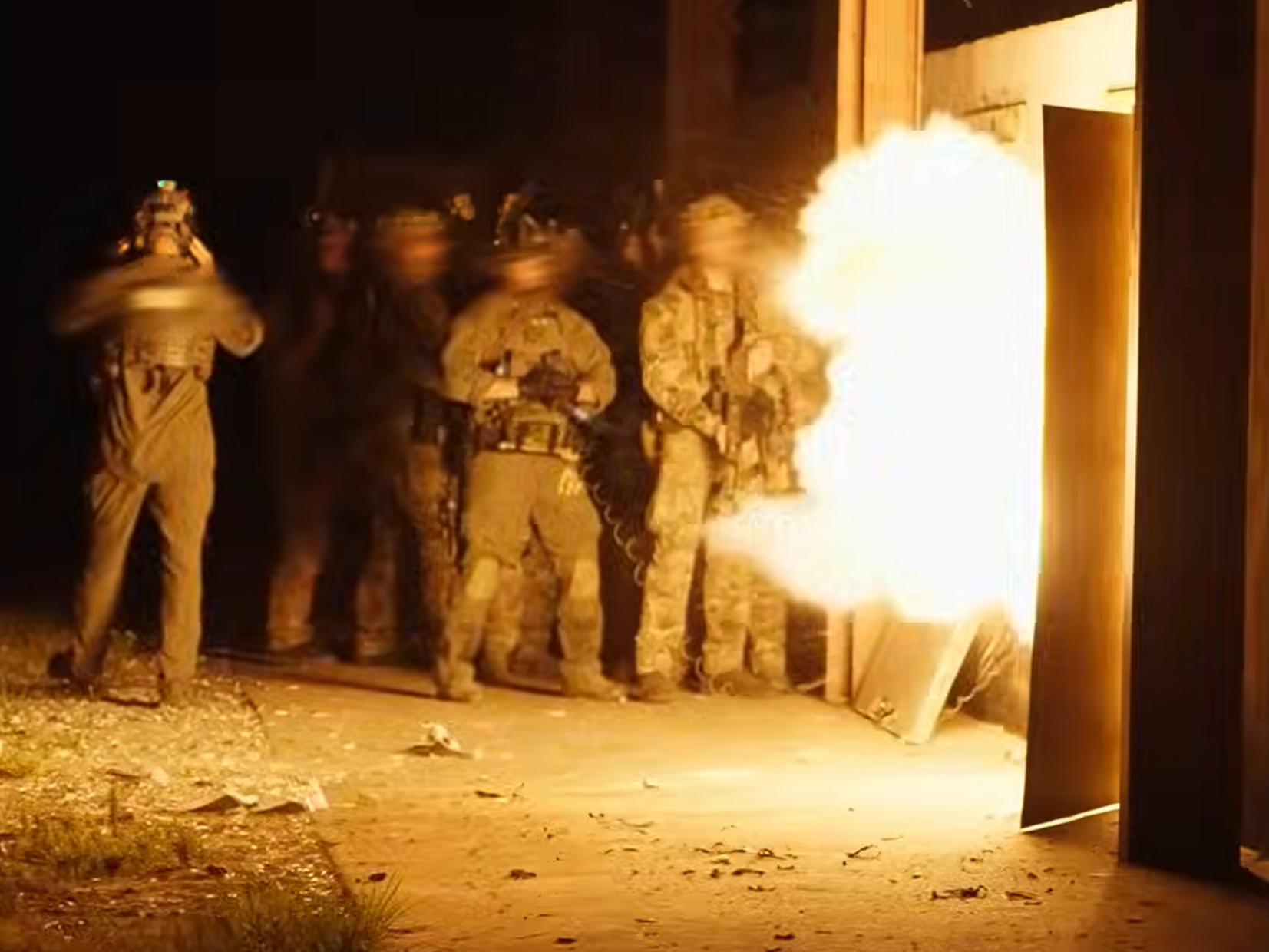
A facility-level engineering-control system designed to reduce blast-overpressure pathways in close-quarters and urban training environments.
Protect | Preserve | Execute
SDVOSB I U.S.-Based and Manufactured
Built for
Designed to Protect
C-BOS System
Close-Quarters / Urban Training Facilities • CQB / CQC • MOUT / SOUC • Shoot Houses • Breach Houses • Room Clearing • Dynamic Entry • Explosive Breaching
Breachers • Assault Teams • Instructors • RSOs • Safety Personnel • Training Cadre • Support Personnel
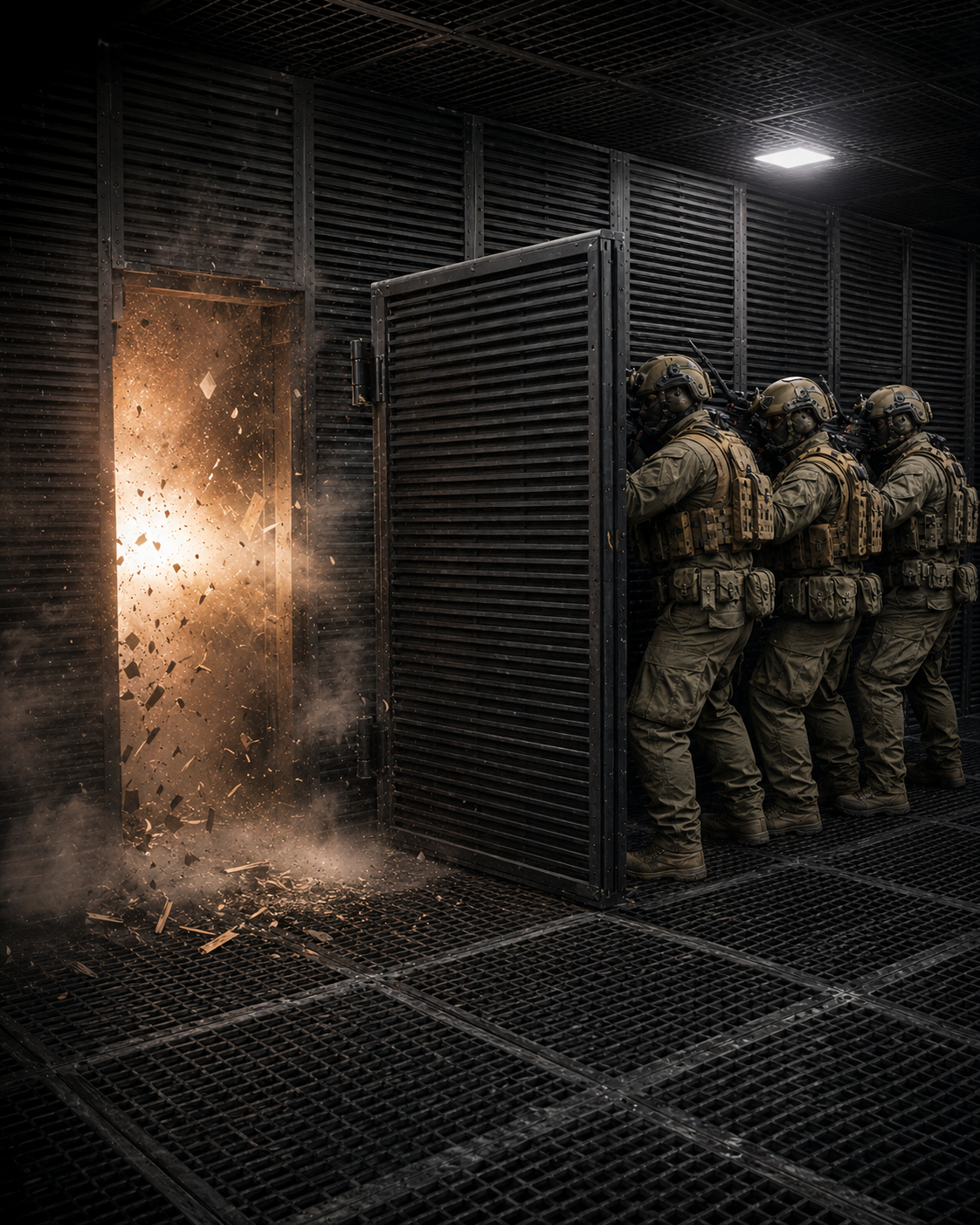
C-BOS is designed for enclosed and semi-enclosed military training facilities where explosive breaching, CQB/CQC, shoot-house, MOUT/SOUC, and confined-space training can create complex reflected-pressure pathways.
C-BOS is a modular facility-level engineering-control system configured around room geometry, breach points, training flow, charge-based MSD considerations, essential personnel proximity, and reflected-pressure pathways.
The Reflected BOP Problem
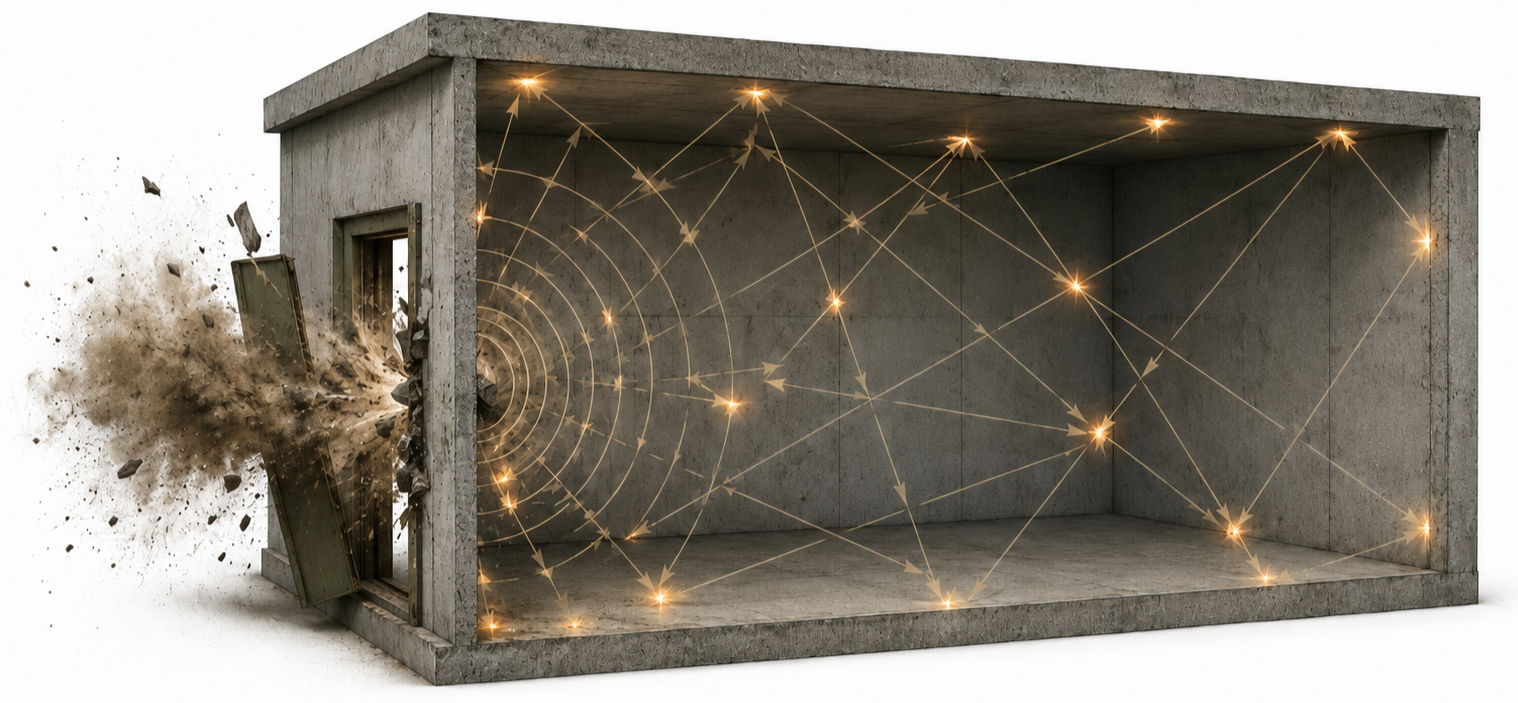
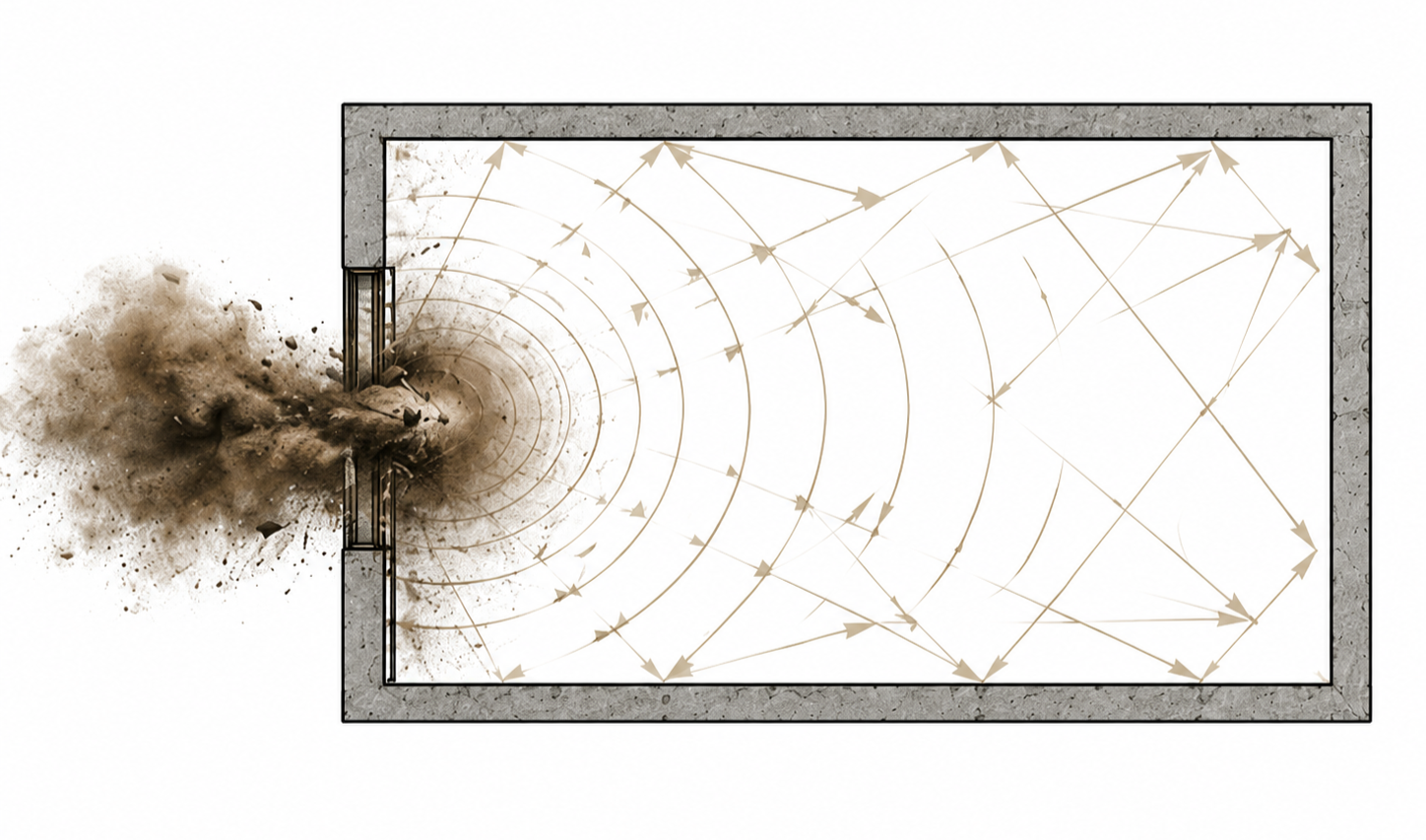
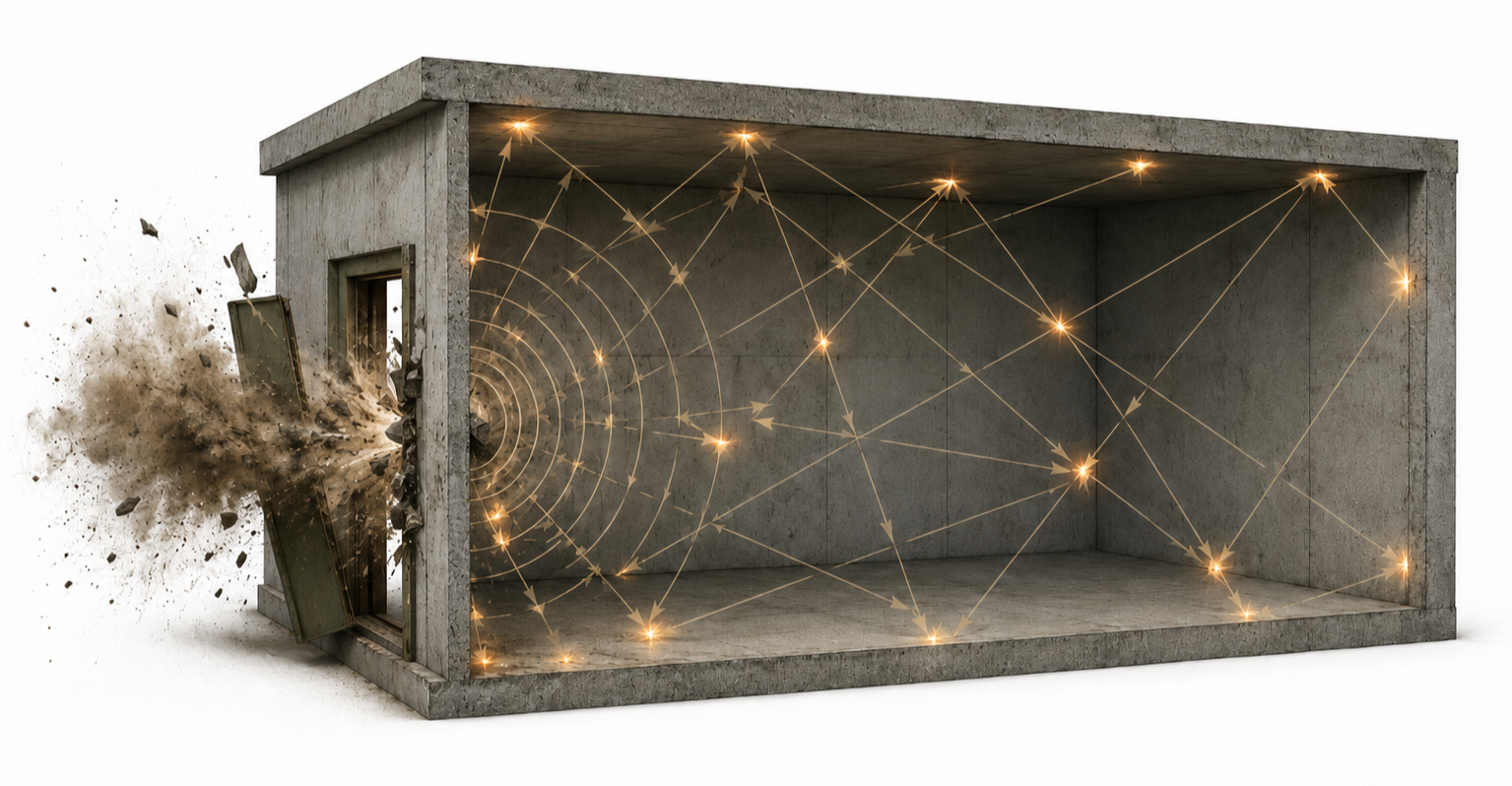
Close-quarter and urban training facilities create a different blast-overpressure problem than open ranges. In enclosed and semi-enclosed spaces, blast waves can reflect from walls, ceilings, floors, corners, doorways, hallways, and equipment before returning into occupied training areas.
That reflected pressure can create localized exposure zones near breach points, entry paths, hallways, corners, and hard-surface areas where personnel must train, instruct, observe, and control safety.
The challenge is not to reduce realism. The challenge is to reduce avoidable reflected exposure while preserving the training environment and training realism.
C-BOS is designed to address these reflected blast pathways at the structural level.
Reduce Reflected BOP Where Minimum Stand-Off Distance Is Constrained
Explosive breaching training uses charge-based minimum stand-off distances to reduce blast-overpressure exposure for observers and non-essential personnel.
But in close-quarter and urban training facilities, essential personnel cannot always simply move farther away. Breachers, instructors, assault teams, RSOs, and training cadre may need to remain near the breach point, entry path, hallway, or room to execute or control the training event.
C-BOS adds a facility-level engineering-control layer designed to reduce reflected BOP pathways from walls, floors, ceilings, corners, doorways, hallways, and hard surfaces — supporting realistic training while improving exposure-control options inside the facility.
Charge-Based MSD
Minimum stand-off distance depends on charge type, charge size, placement, and training configuration.
Essential Proximity
Breachers, instructors, RSOs, assault teams, and cadre remain close because such training requires closer proximity.
C-BOS Control Layer
Facility-level engineering controls reduce reflected BOP pathways where distance alone is constrained.
Facility Geometry
Rooms, hallways, corners, doorways, walls, floors, ceilings, and hard surfaces reflect and shape BOP pathways.
A Facility-Level Engineering-Control System
C-BOS is not a one-size-fits-all wall covering. It is a modular engineering-control system configured around the facility, training use case, breach points, personnel movement, charge-based MSD considerations, and reflected-pressure pathways.
Modular - Configured around facility geometry, training use case, and priority exposure zones.
Reflection-Focused - Designed to reduce room-returned overpressure from walls, ceilings, floors, corners, doorway areas, and hard surfaces.
Training-Compatible - Built to support close-quarter and urban training without compromising the training objective.
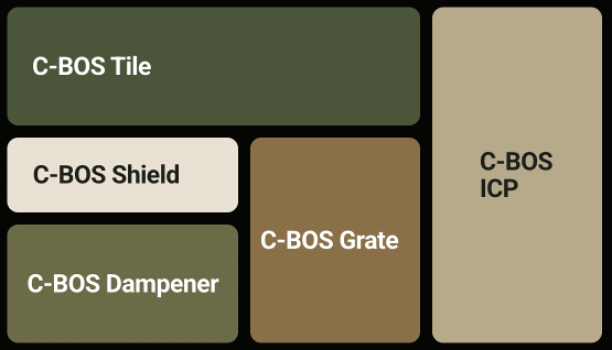
Integrated - Combines tile, dampening, shield, grate, and pressure-management components into a coordinated system.

C-BOS System Components
C-BOS Tile
Blast Overpressure Tile
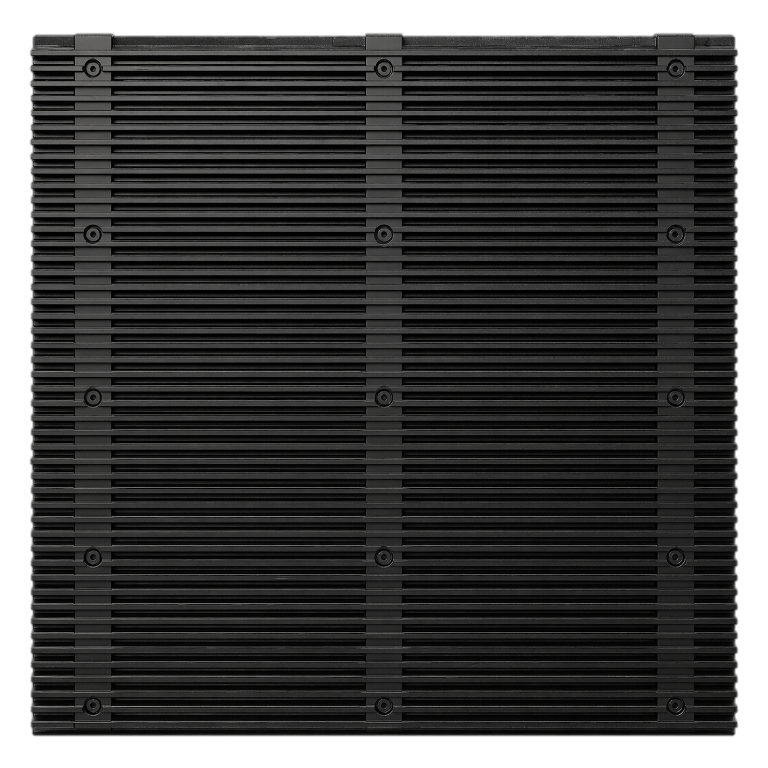
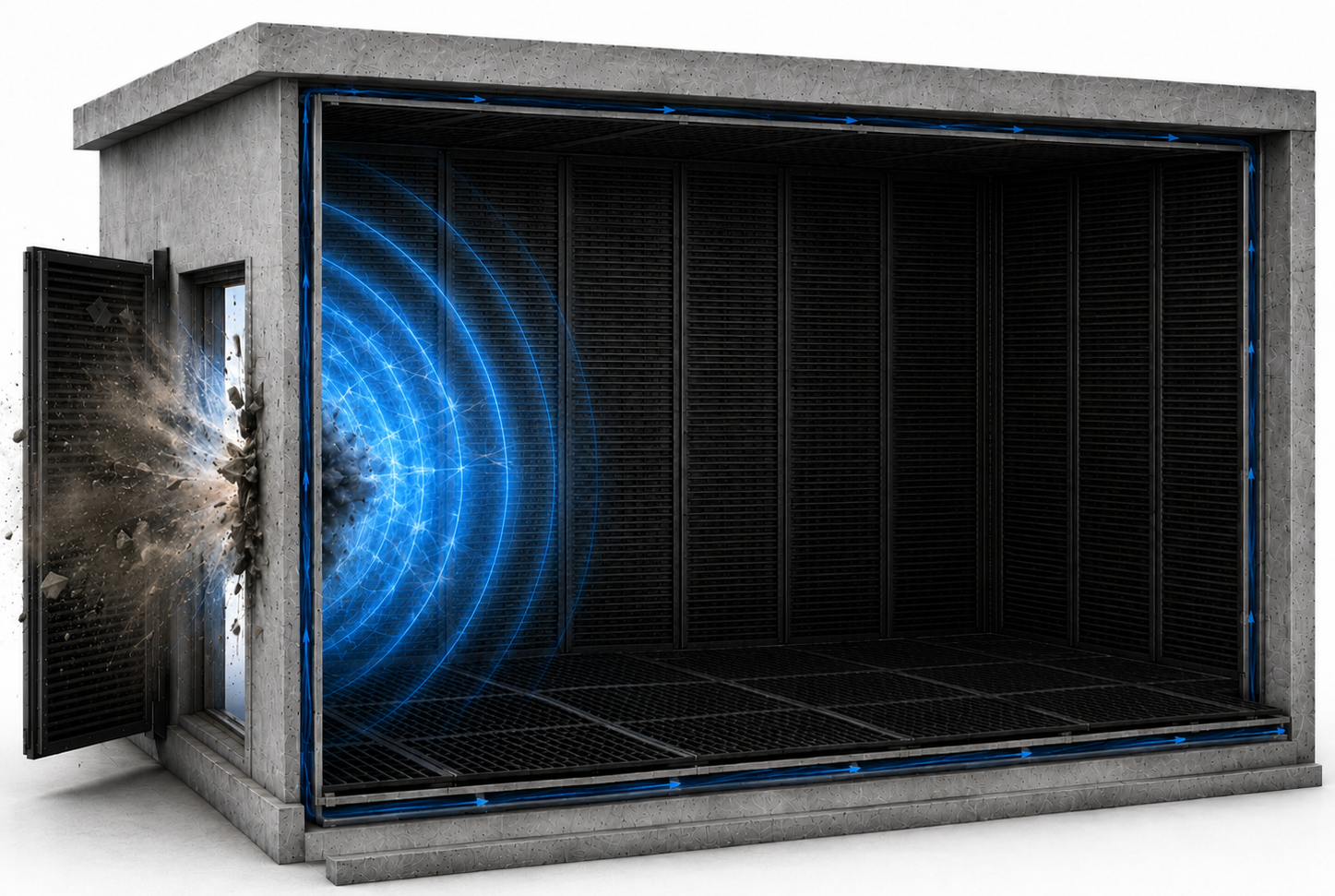
Modular wall and ceiling controls designed to capture, redirect, and diffuse reflected BOP pathways.
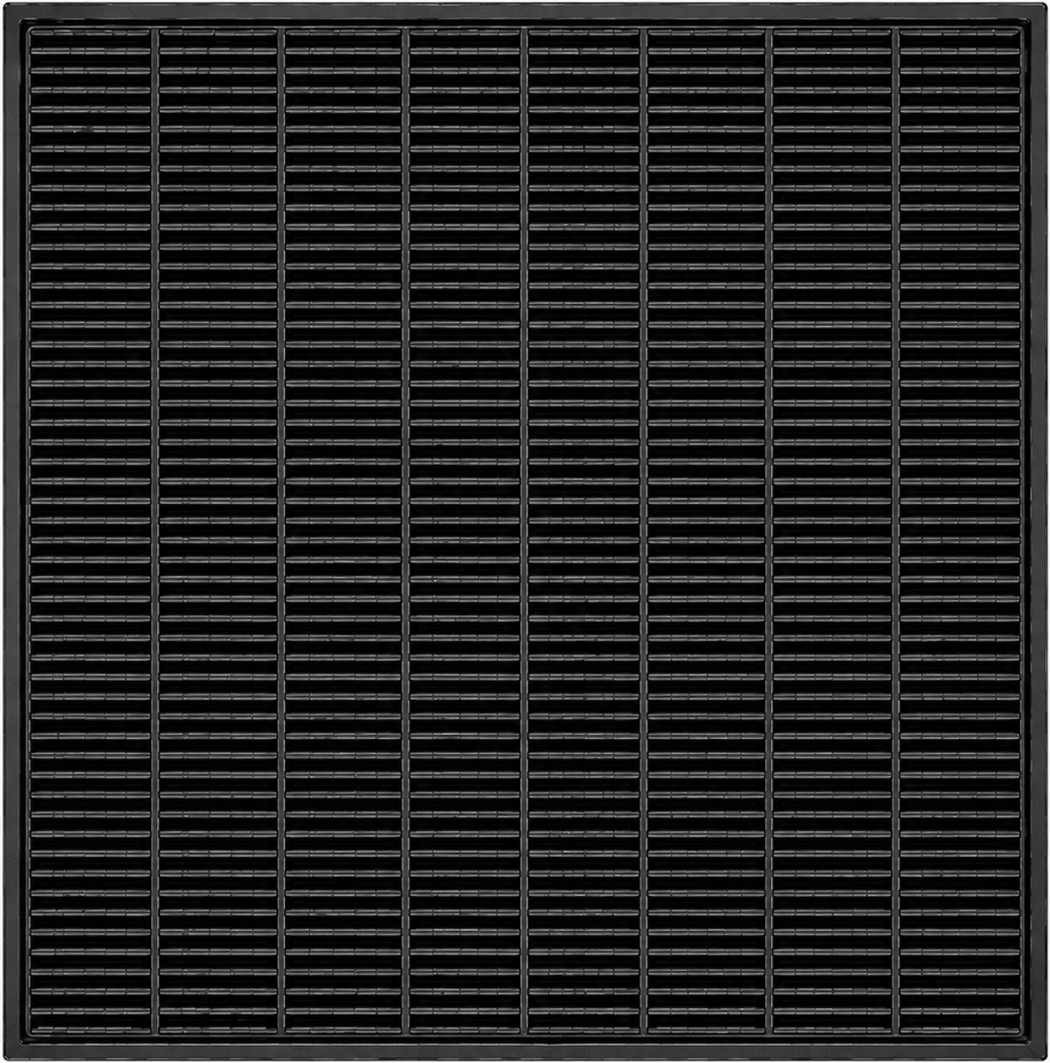
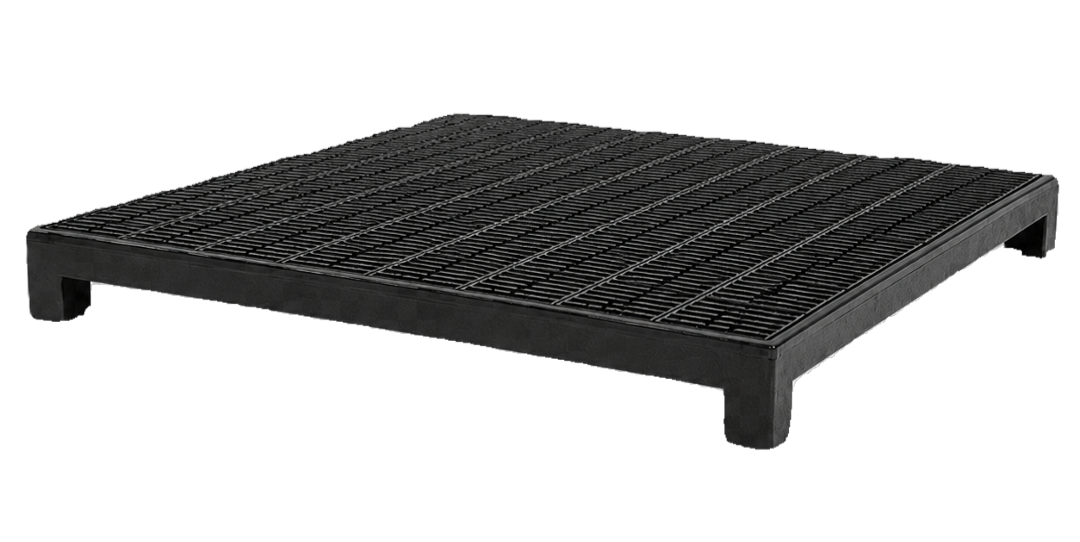
C-BOS Grate
Blast Overpressure Grate
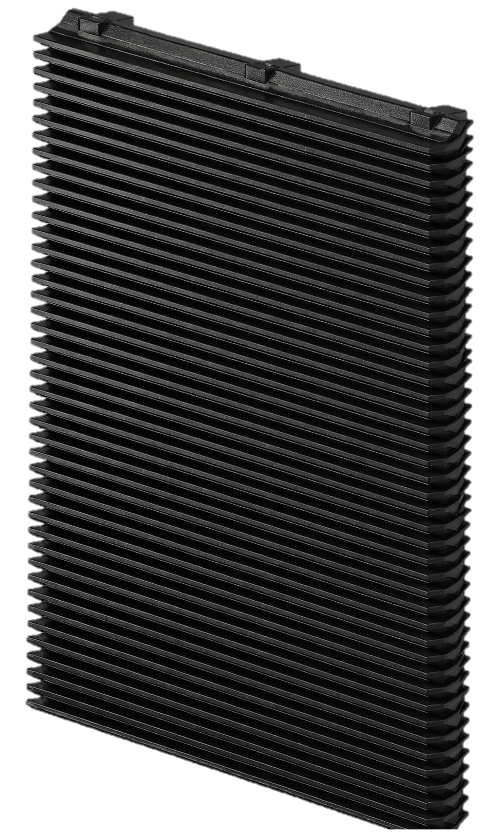
A modular floor component designed to reduce hard-surface ground-plane reflection and support repeatable floor-level mitigation.
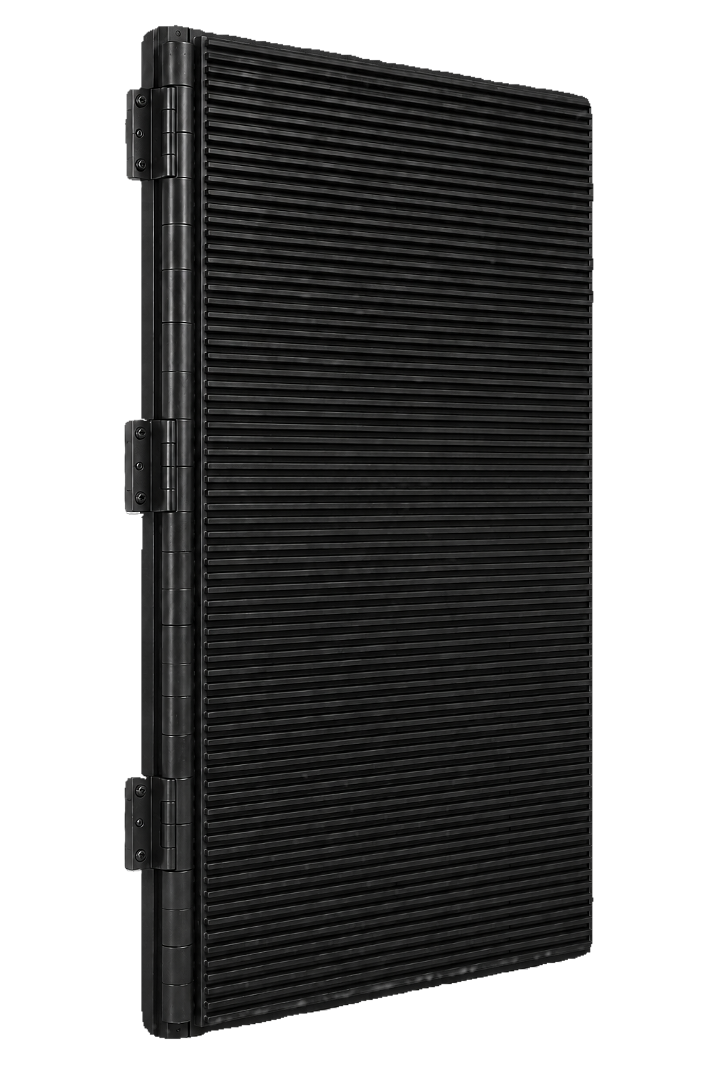
C-BOS Shield
Blast Overpressure Shield
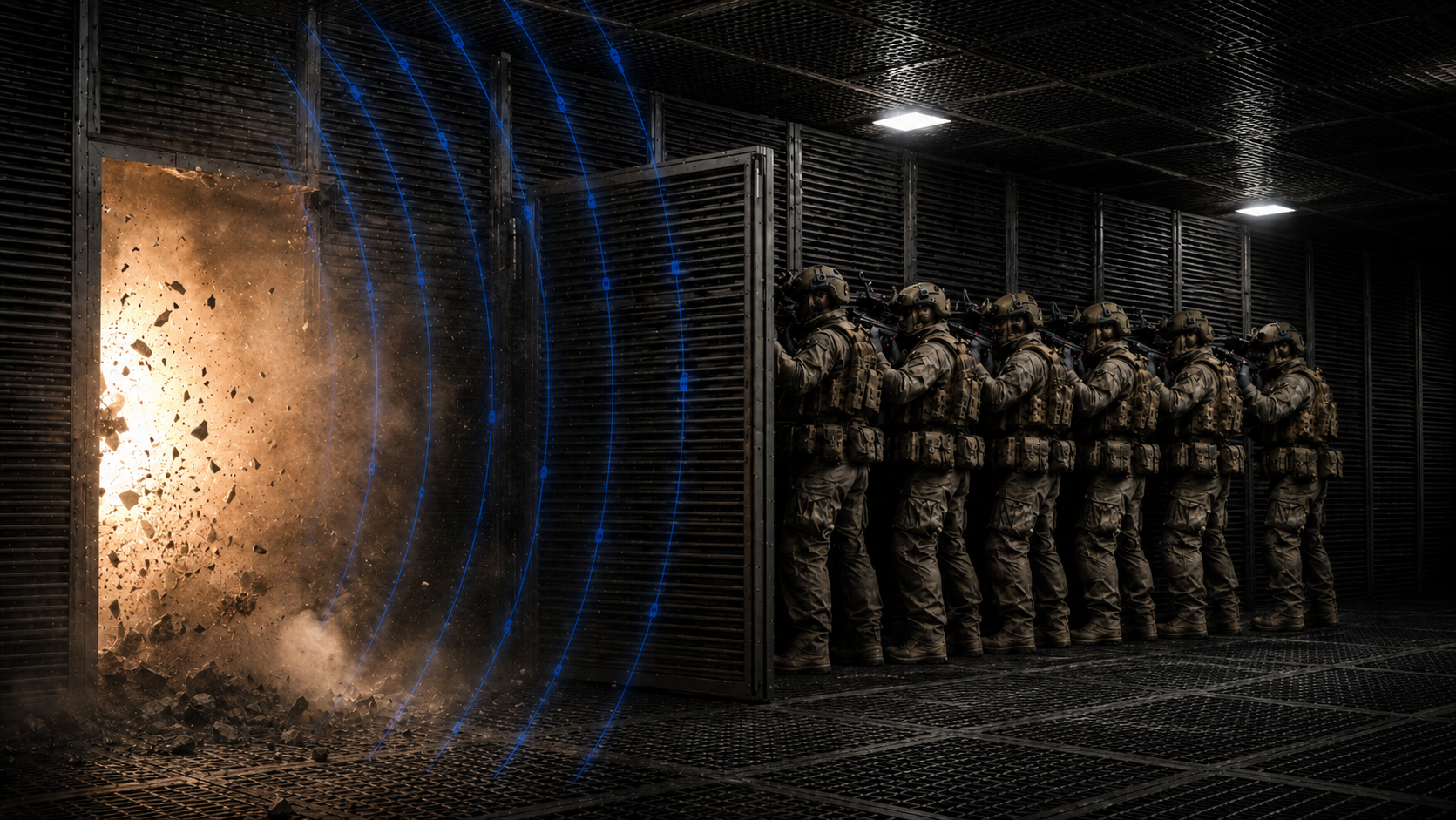
A wall-mounted hinged barrier designed to deploy before charge initiation to help reduce direct lateral exposure, debris, and fragmentation pathways near the breach point.
C-BOS Dampeners
Blast Overpressure Dampeners
Behind-tile damping elements designed to slow pressure movement behind the tile field and reduce residual venting into cavity or overhead spaces.
C-BOS Integration
Integrated System Design
A coordinated pressure-management architecture that aligns wall, ceiling, floor, shield, grate, and dampening components around facility layout, breach points, training flow, and reflected-pressure pathways.
How C-BOS Works
In close-quarters training spaces, blast overpressure can reflect, combine, and travel across hard surfaces instead of moving in a single clean direction.
C-BOS uses engineered geometry and dampening materials to interact with those reflected pathways — helping break up, redirect, and reduce reflected blast movement.
The result is a physical engineering-control approach for reducing avoidable reflected exposure without changing the core training environment.
Is C-BOS a Fit for Your Facility?
C-BOS is intended for close-quarter and urban training facilities where repeated impulse events, hard-surface reflection, charge-based stand-off constraints, and personnel proximity create avoidable BOP exposure concerns.
Target applications
Explosive breaching facilities
CQB/CQC and room-clearing training areas
Shoot houses and kill houses
MOUT/SOUC training sites
Confined or semi-confined training rooms
Doorway, hallway, corner, and breach-point training areas
Pilot rooms, retrofit areas, or new facility designs
Strong-fit conditions
Breachers, instructors, RSOs, or assault teams must operate near the blast area
Hard surfaces may reflect pressure back into occupied training areas
Training uses repeated charges or impulse-generating devices
Charge-based MSD is important but facility geometry still creates exposure concerns
The command wants a pilot area before broader retrofit or construction planning
The facility needs modular mitigation without eliminating realistic training
Preserve Close-Quarter and Urban Training
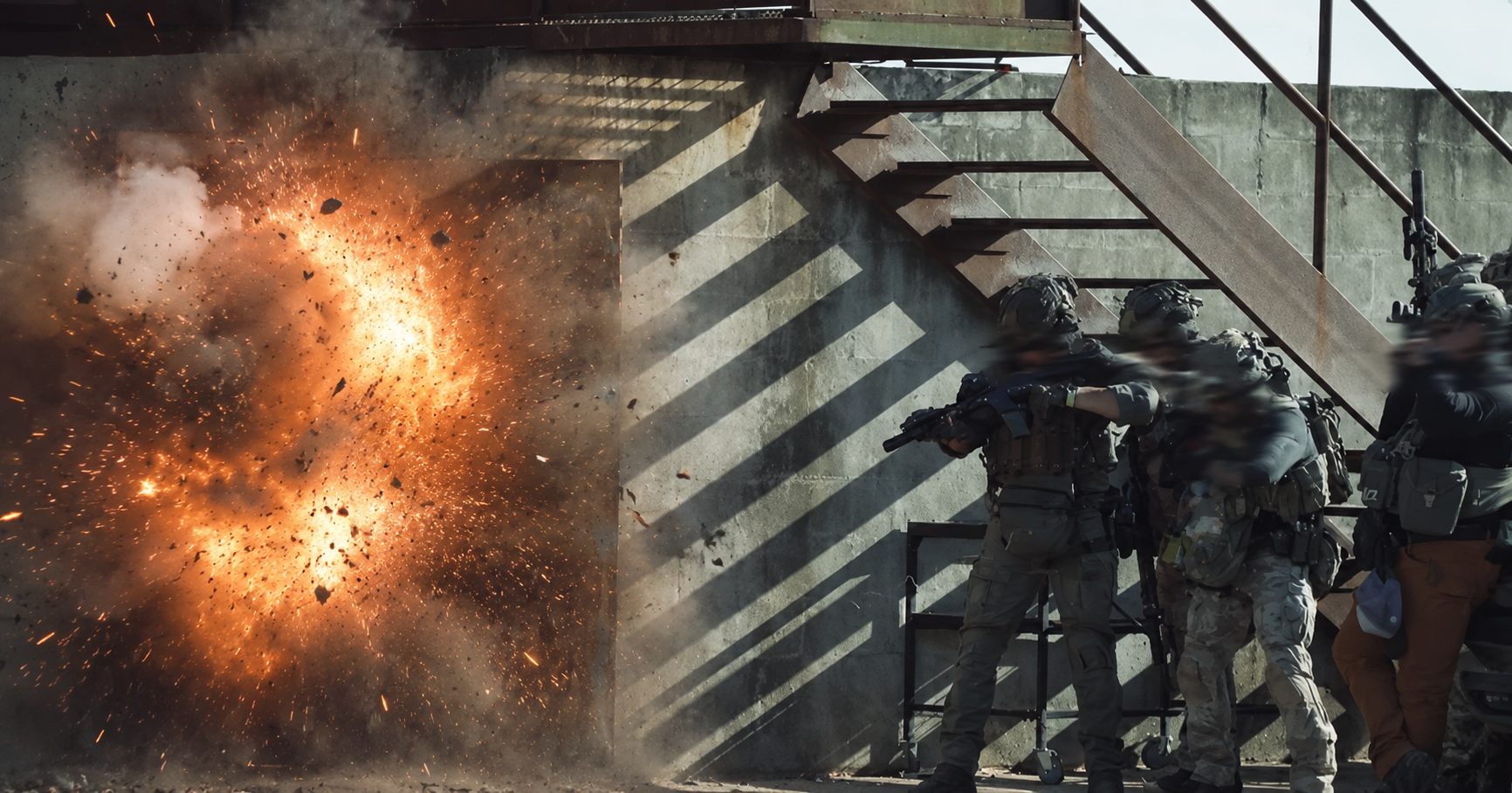
C-BOS is not designed to make training easier or less realistic. It is designed to help units reduce avoidable reflected exposure while preserving realistic explosive breaching, CQB/CQC, room-entry, MOUT/SOUC, and confined-space training.
By adding facility-level engineering controls, C-BOS supports BOP risk-management objectives without forcing commanders to choose between exposure reduction and mission-essential training.
“DoD has formalized blast-overpressure risk-management requirements and identified breaching charges as a relevant exposure source. C-BOS is designed to address that problem at the facility level.“
Discuss a C-BOS Pilot for your facility
C-BOS is configured around the facility and training sequence. A pilot discussion helps identify reflected-pressure pathways, essential personnel positions, charge-based MSD considerations, and practical pilot-area opportunities before procurement or broader implementation planning.
1. Review the training use case
Identify the close-quarter, urban, breaching, CQB/CQC, shoot-house, MOUT/SOUC, or confined-space training events the facility supports.
2. Discuss facility geometry
Review room layout, breach points, doorways, hallways, corners, floors, ceilings, wall surfaces, and hard-surface reflection areas.
3. Map personnel and MSD constraints
Evaluate charge-based MSD considerations, essential personnel positions, staging areas, entry paths, instructor locations, and safety-control positions.
4. Identify pilot-area opportunities
Determine where tile, dampener, shield, grate, and integrated mitigation-path components may reduce reflected BOP pathways.
5. Align on evaluation and next steps
Discuss pilot-area objectives, sensor-placement options, user-feedback points, procurement considerations, and follow-on configuration decisions.