
BORS — Blast Overpressure Range System
Operator-informed. Range-integrated. Engineered to mitigate blast-overpressure exposure during high-BOP military training.
SDVOSB I U.S.-Based and Manufactured
Protect
the troops
I
Preserve
training
I
Execute
the mission
Pilot a BORS Lane
Built for
Military Ranges • High-BOP Weapons Training • Live-Fire Training Lanes
Designed to Protect
RSOs • Instructors • Gunners • Assistant Gunners • Range Cadre • Nearby Training Personnel
Blast Exposure: The Range Training Issue
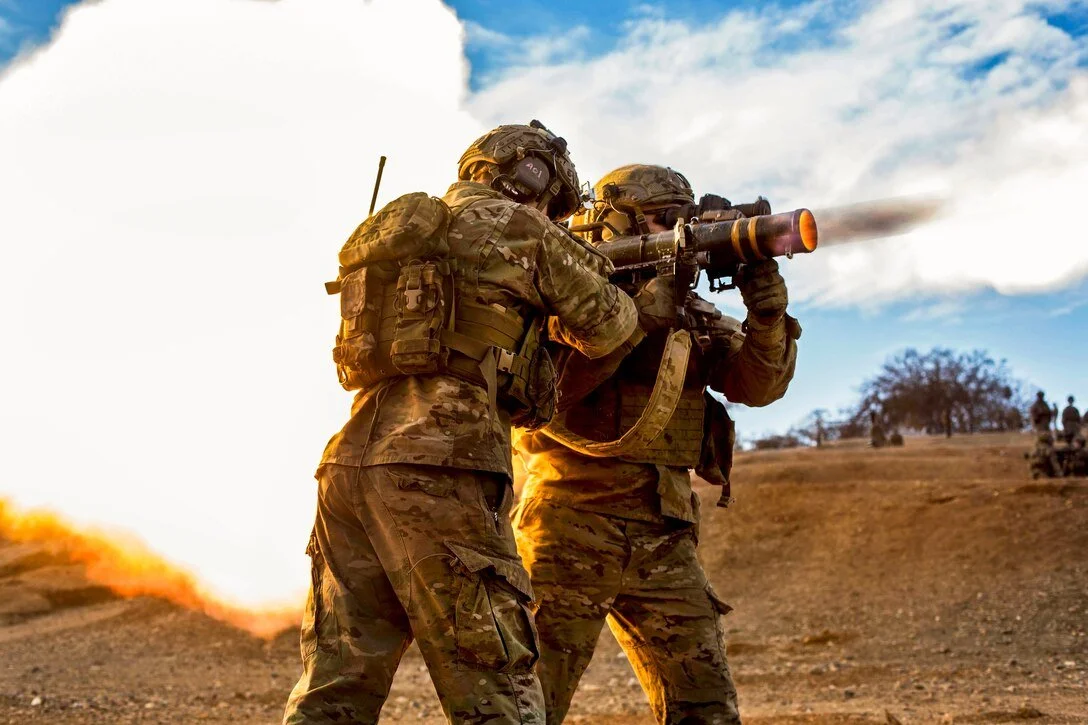
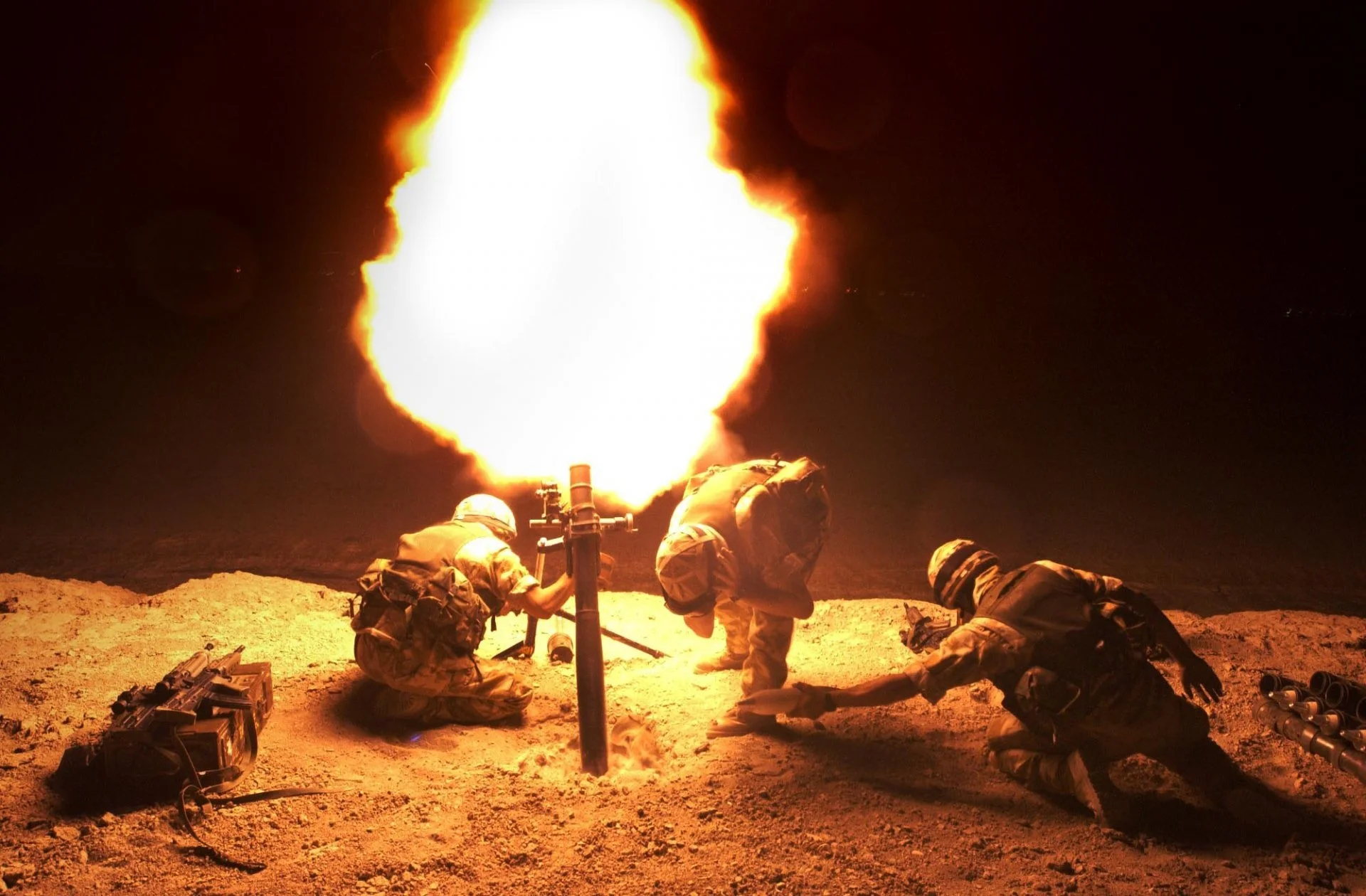
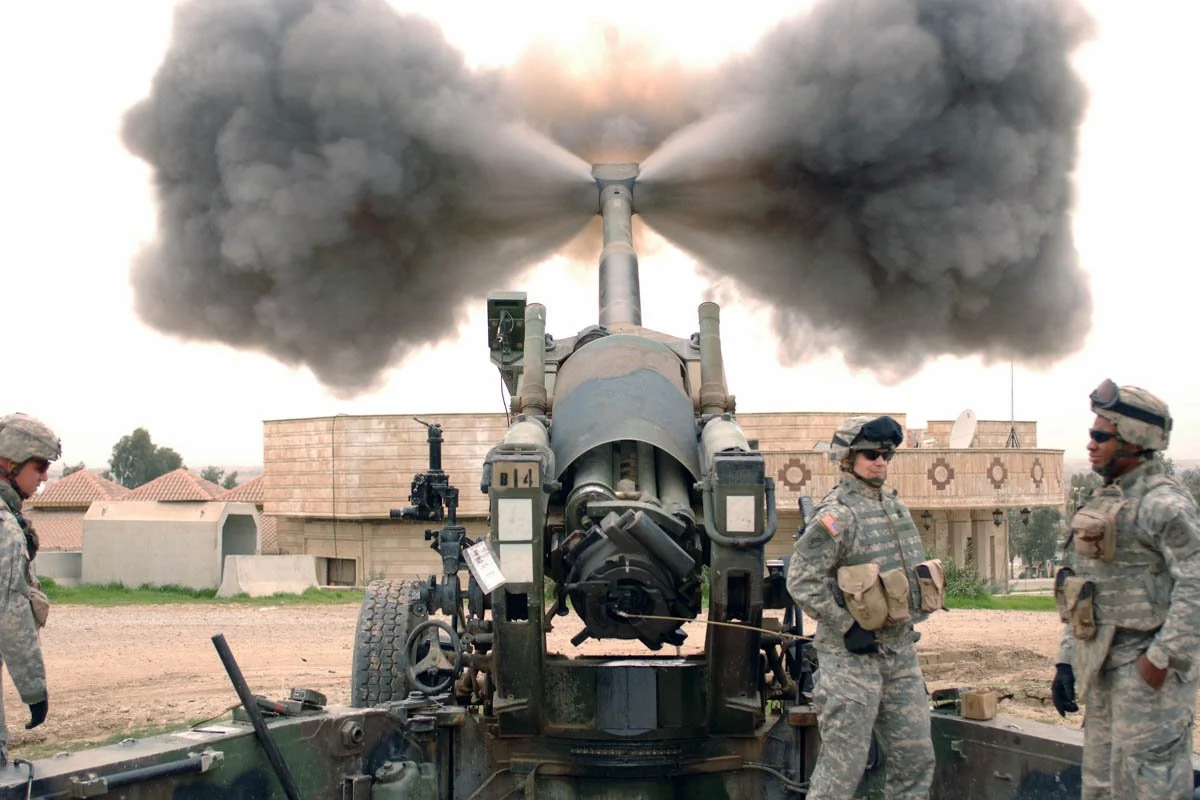
High-BOP weapons training does not only expose the shooter. Blast overpressure can move laterally, reflect from the ground plane, affect adjacent positions, and repeatedly impact personnel who remain on the line across multiple shots, evolutions, classes, and training days.
RSOs, instructors, assistant gunners, and range cadre often carry the repeated exposure burden because their roles require proximity, observation, correction, and safety control.
The operational challenge is clear: reduce avoidable BOP exposure without weakening training realism, tempo, or readiness.
Extending ALARA with Engineering Controls
ALARA, standoff distance, exposure tracking, PPE, and personnel rotation are important. BORS does not replace them.
But on live-fire ranges, distance is not always controllable. RSOs must control the lane. Instructors must observe and correct. Assistant gunners and gunners must remain near the firing process. Range geometry, ground reflection, weather, terrain, adjacent lanes, and firing cadence further shape BOP exposure.
BORS adds a physical engineering-control layer at the lane level — reducing reliance on distance alone when training realism, safety oversight, and range variables limit what distance can solve.
Repetition Gap
Training cadre remain exposed across repeated shots while students rotate.
Environment Gap
Weather, terrain, ground reflection, and lane geometry cannot be fully controlled.
Distance Gap
Personnel cannot always move farther away and still control training.
BORS Control
A repeatable physical BOP mitigation layer where distance-based controls are limited.
BORS — an Integrated Range-Lane Training System
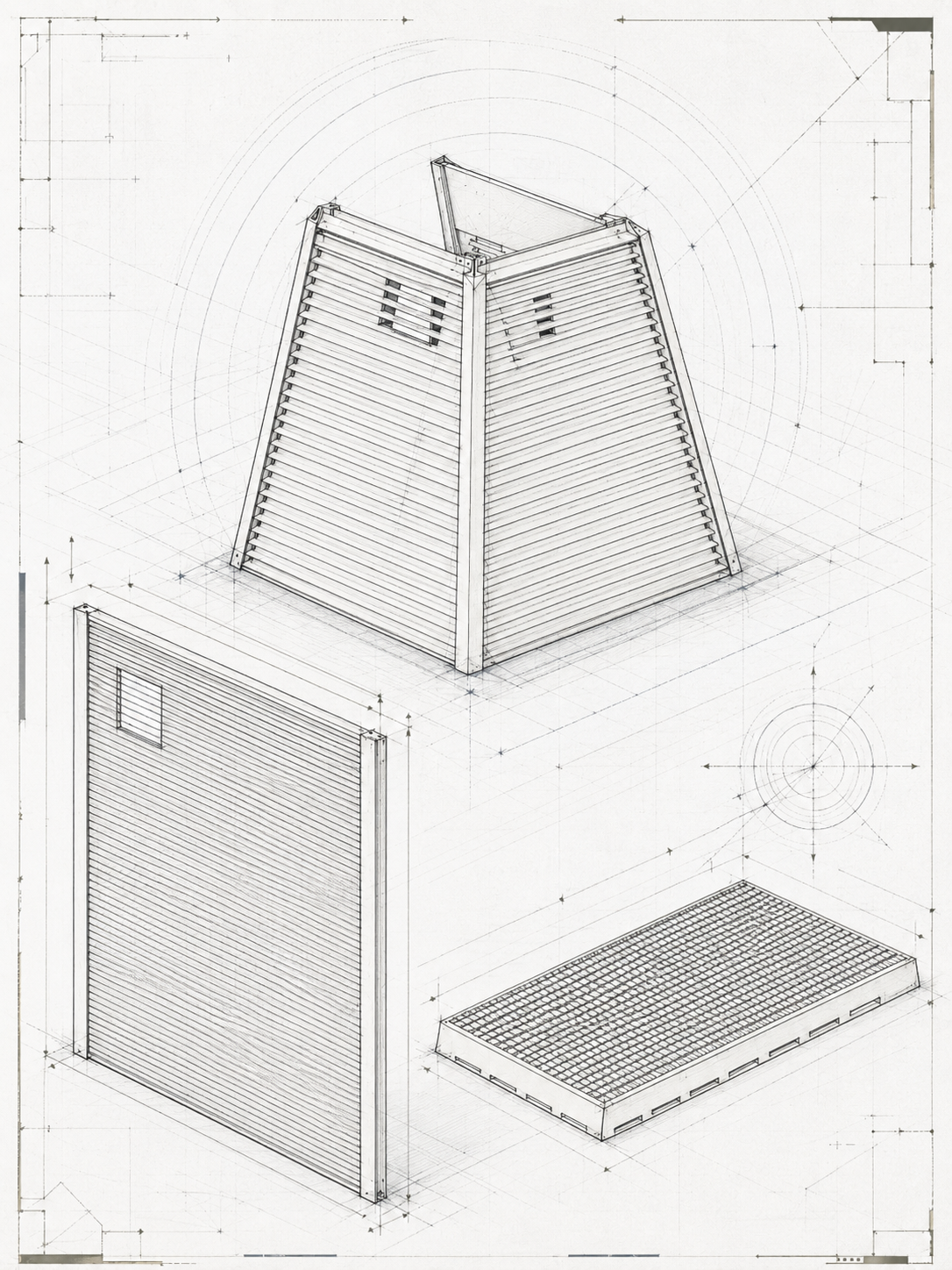
BORS is configured as a lane-based BOP mitigation system. Each patented component addresses a specific blast-overpressure pathway common to high-BOP range training.
BOS
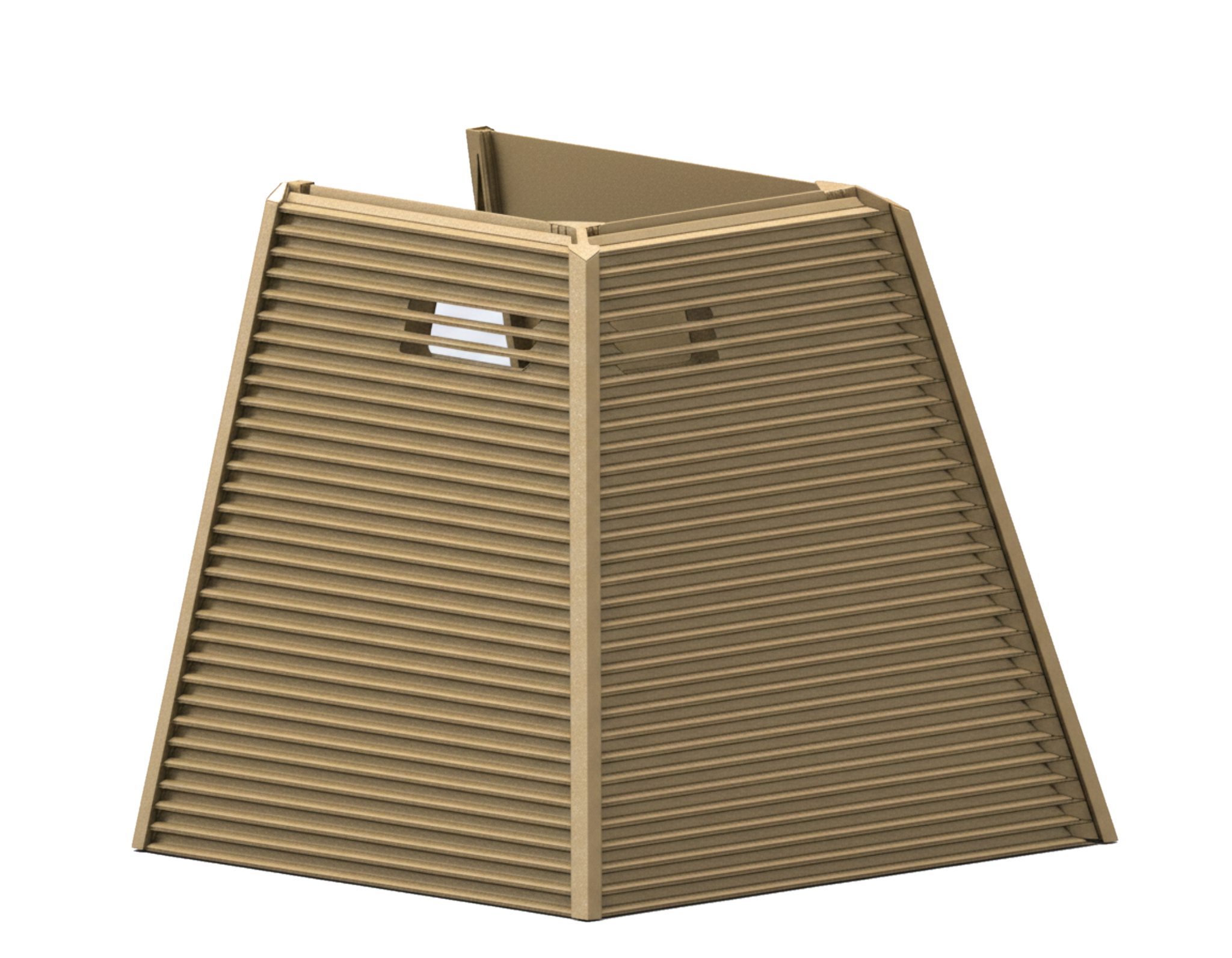
Blast Overpressure Shield
The primary directional mitigation component, positioned to redirect BOP pathways away from critical personnel locations.
BOG
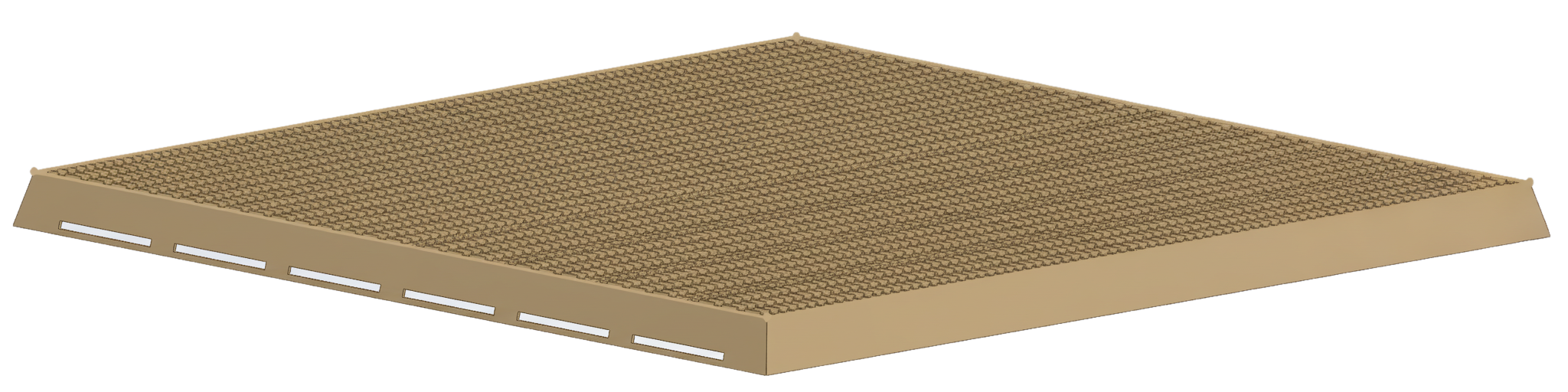
Blast Overpressure Grate
Designed to mitigate ground-plane reflection, support firing-position consistency, and create a repeatable reference point for personnel placement and sensor correlation.
BOW
Blast Overpressure Wall
Designed to reduce lateral BOP movement across the firing line and between adjacent training positions.

ILC
Integrated Lane Configuration
Combines BOS, BOG, and BOW into a coordinated lane architecture planned around weapon type, firing position, personnel placement, range geometry, sensor locations, and training flow.
Uses proprietary geometry and material design intended to dampen and redirect blast effects away from protected positions.
Each element addresses a different blast vector, and removing one element leaves a protection gap.
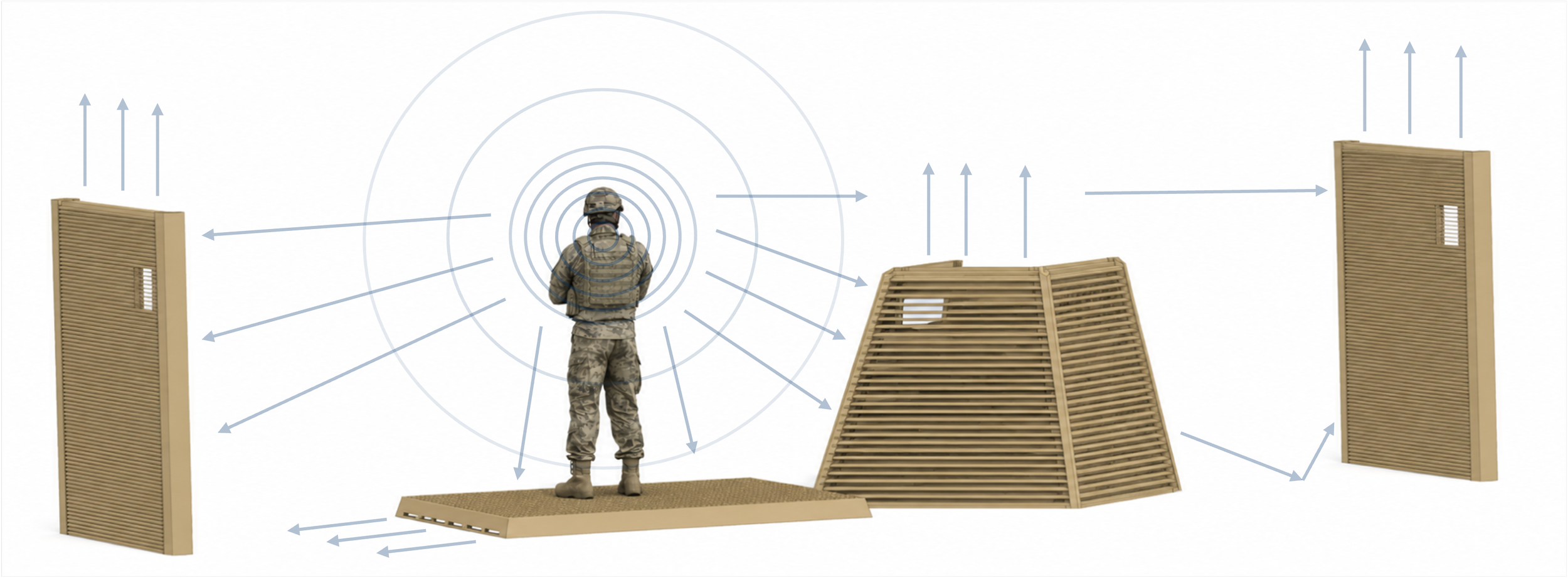
The blue lines represent managed BOP wave from the weapon-source. The BOG manages ground-plane reflection, the BOS redirects BOP away from key personnel positions, and the BOW controls lateral exposure across the firing line.
Instrumentable
Supports sensor placement, repeatable testing, and operational evaluation.
Configurable
Can be planned around weapon system, range geometry, and use case.
Cadre-Focused
Supports RSOs, instructors, assistant gunners, and other high-dose training roles.
ALARA-Compatible
Adds a physical mitigation layer to existing risk-management practices.
Live-Fire Evidence
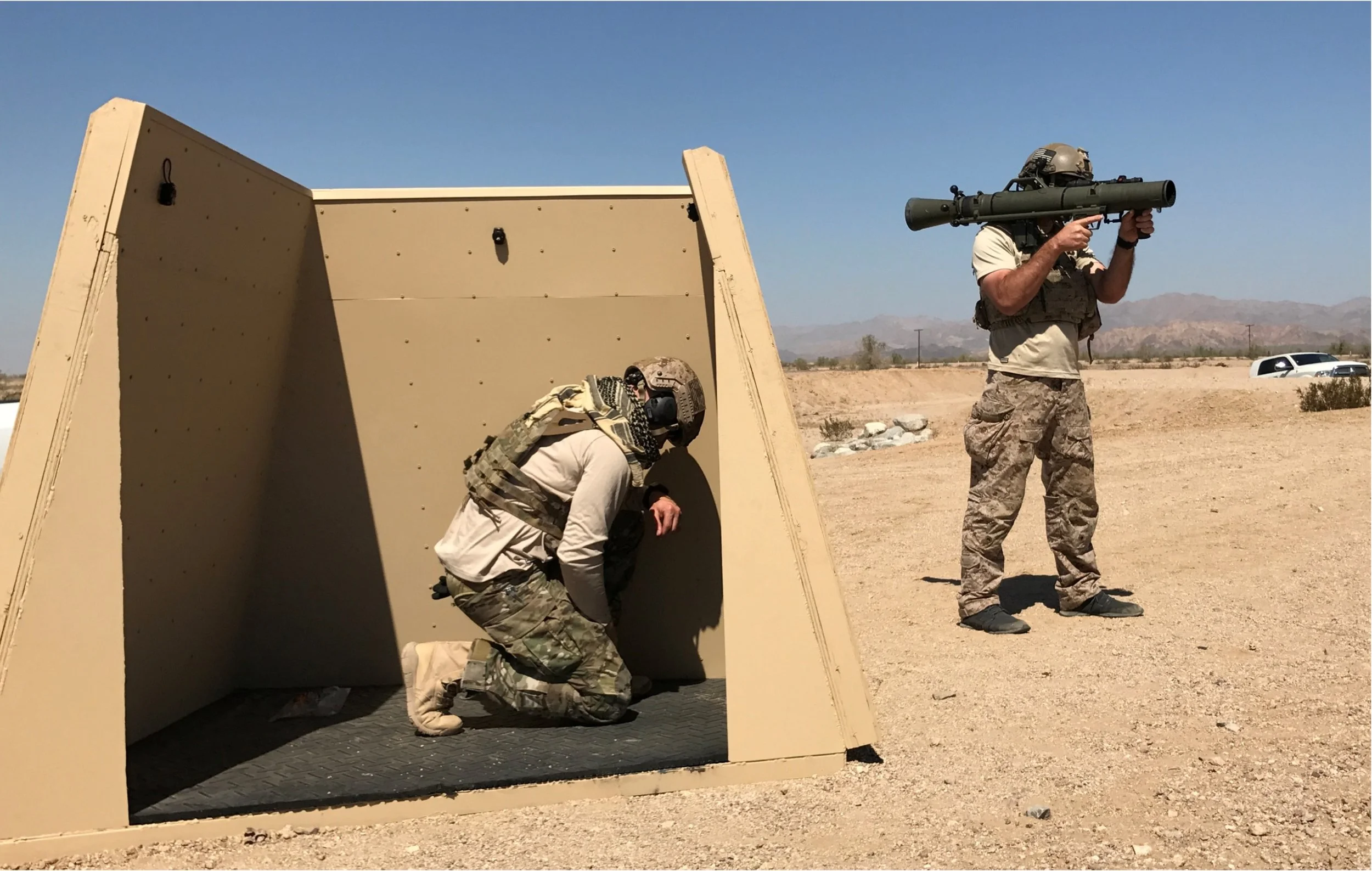
BORS has been evaluated during a live-fire Carl Gustav training evolution with NSW.
EBSS worked with the NTRT team, which supported the live-fire test with blast-overpressure sensors, sensor apparatus, test-procedure guidance, and sensor-placement support.
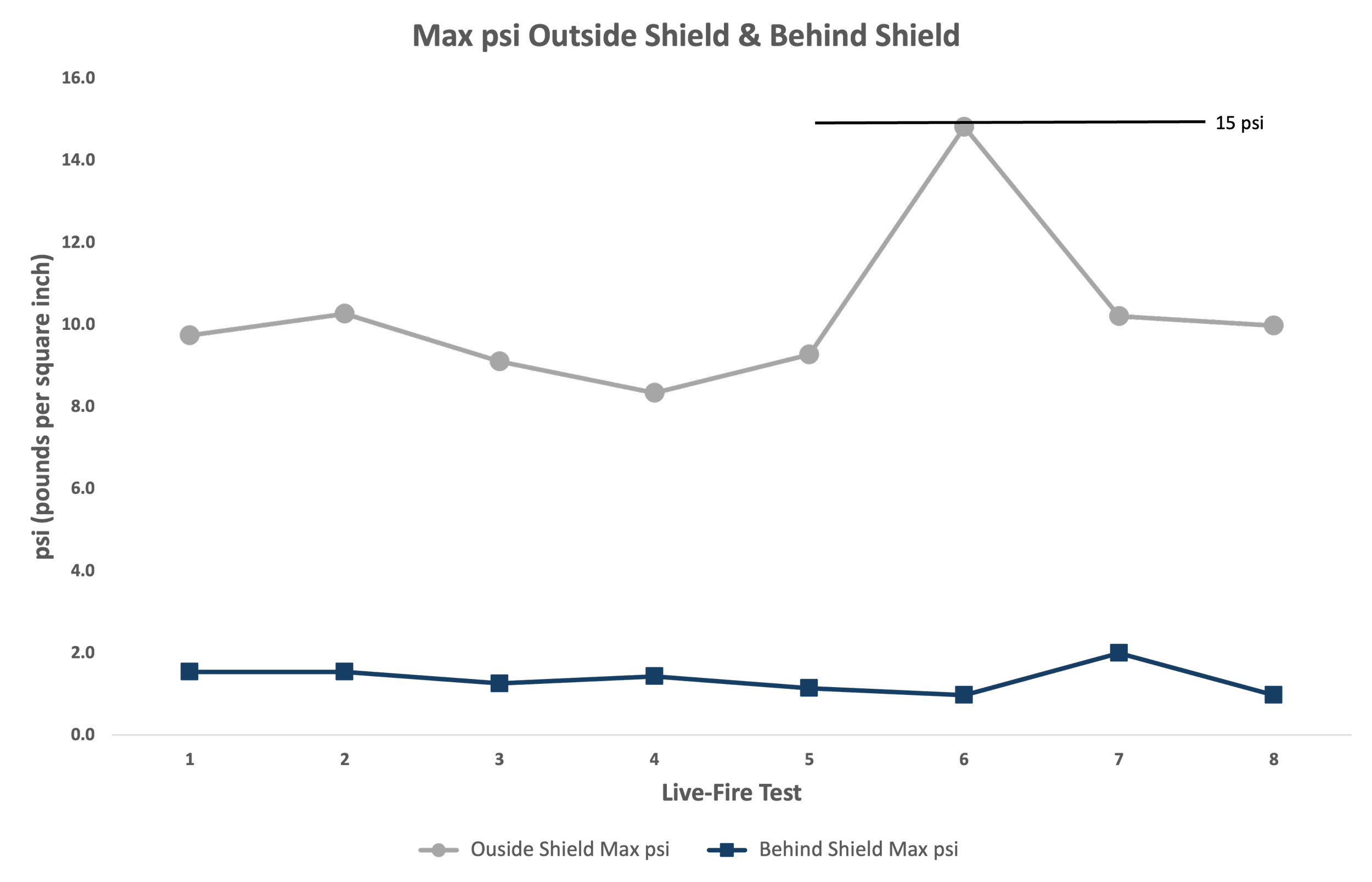
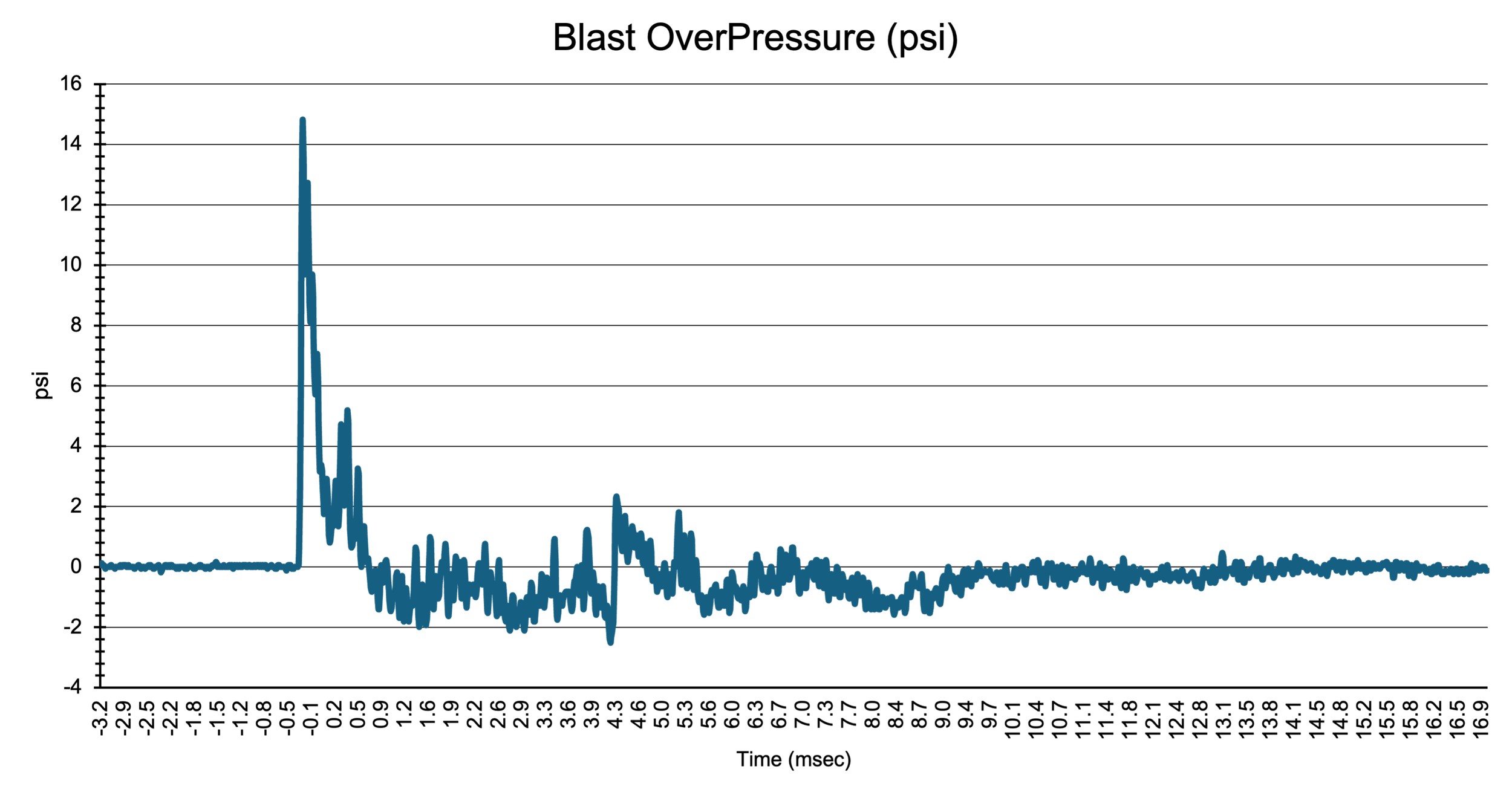
Blast overpressure sensors were placed outside the shield and at the protected RSO position behind the shield. Results showed an approximately 87% reduction in measured peak BOP at the protected position.
The result matters because it moves BOP mitigation beyond awareness and administrative control. The results demonstrate that BORS can be instrumented, measured, and fielded for realistic training conditions.
Outside Shield
10.2 psi
Average Peak BOP
Behind Shield
1.4 psi
Average Peak BOP
Reduction
-8.8 psi (~87%)
Average Peak BOP
Measured ~87% Peak BOP Reduction
Qualitative Results
RSOs and range training personnel reported perceived reductions in immediate post-training symptoms after shielded use, including headache, nausea, fatigue, ringing in the ears, sleep difficulty, and irritability.
Beyond Mitigation: A Platform for Training and Research
BORS supports more than blast-overpressure mitigation.
Because the system creates a repeatable physical lane configuration, it can support training standardization, sensor placement, operational evaluation, research instrumentation, and future training hardware integration.
For military stakeholders, BORS provides a more controlled way to study, manage, and improve high-BOP training environments.
-
Standardizes role positions, training flow, data collection, and exposure comparison across evolutions.
-
Supports fixed or semi-permanent sensor locations for longitudinal monitoring, range comparison, and operational evaluation.
-
Supports collaboration with military, medical, engineering, and blast-injury research partners.
-
Can support position markers, sensor mounts, data-capture modules, range indicators, and maintenance tracking.
-
Supports requirements development, capability evaluation, budget justification, and fielding decisions.
Is BORS a Fit for Your Range?
BORS is intended for high-BOP military range environments where blast exposure is repeated, personnel proximity is operationally required, and distance-based controls alone may not fully address range conditions.
BORS is especially relevant for ranges where RSOs, instructors, assistant gunners, gunners, students, and nearby personnel remain near repeated firing events to observe, coach, control safety, maintain throughput, or preserve realistic training flow.
Target Applications
Shoulder-fired weapons training
Carl Gustaf / M3 MAAWS, AT4, LAW, and similar systems
Mortar and indirect-fire training positions
.50 caliber rifle and machine-gun ranges
Heavy-weapons training lanes
Multi-lane ranges with lateral or adjacent-position exposure concerns
Special operations and conventional force training environments
Strong Fit Conditions
Repeated firing across training days, courses, or unit rotations
RSOs, instructors, assistant gunners, or cadre must remain close
Ground-reflection, lateral-pressure, or adjacent-lane exposure is a concern
The range needs repeatable lane configuration, sensor placement, or operational evaluation
Pilot a BORS Lane
EBSS supports military stakeholders from initial BORS briefings through range-fit assessment, pilot-lane planning, sensor-placement discussion, live-fire evaluation support, data review, and procurement-pathway alignment.
Pilot discussion can include:
Weapon system and range-lane review
RSO / instructor / assistant gunner positioning
BOS / BOG / BOW / ILC configuration
Sensor placement and evaluation planning
Pilot-lane objectives and success criteria
Procurement or follow-on fielding pathway