
“ EBSS is a practical, on-range mitigation layer that reduces peak blast overpressure for all training personnel — maintaining readiness, reducing brain-health risk, and supporting evolving policy expectations. ”
Why Now
Operational Readiness
Blast overpressure is a training and tempo problem, not just a battlefield problem. Heavy weapons and shoulder-fired training can repeatedly expose military personnel (RSOs / instructors / gunners / assistant gunners / training cadre) to significant BOP and associated brain health risk.
The Department of Defense (DoD) is now directing practical risk-management actions—mitigation, tracking, and education—so military units can sustain training realism without readiness loss.
Medical Reality
Research indicates that mTBI (mild TBI) is realized with repeated (3 or more) BOP exposure of 2 - 3 psi. The DoD notes that repeated BOP exposure can affect brain health and produce symptoms similar to mild TBI. Military and other studies report growing concern that BOP can drive brain injury risk, higher risk for neurodegenerative disease and suicide.
DoD and VA clinical resources recognize TBI as a suicide risk factor, and DoD clinical guidance notes a significant increase in suicide risk among service members who sustain a TBI.
Policy & Accountability
BOP exposure and the associated brain health risk has gained administrative momentum as evidenced with formal policy and legislation.
DoD has published requirements to manage brain-health risks from blast overpressure, and Congress has introduced bills (H.R.8025 and S.2883) focused on clarifying responsibilities and improving tracking/research related to blast exposure and brain injury prevention.
The EBSS Advantage
Veteran Led
Owned by Michael Eaves whom is an SDVOB/Special Operations veteran with 20+ years of experience in the military as a warfighter and as a SEAL Chief Petty Officer.
Michael’s experience includes managing SEAL training programs as an RSO with large caliber weapons.
With his experience, he has created and designed the EBSS system to enable all end users to seamlessly and safely do there job without BOP risk.
Built for Training Environments
Deployable configuration intended for repeatable training lane setup
Designed to support correct positioning and consistent use
Implementation approach compatible with range operations and training cadence
Sustainment-ready mindset (inspection and lifecycle support can be briefed)
U.S. Based. Veteran Focus.
EBSS is a U.S.-based company committed to domestic manufacturing and veteran leadership.
Our intent is to utilize U.S.-based manufacturing partners and scale toward an enduring U.S. production footprint.
We have a commitment to our veterans and as such we will prioritize veteran employment as we grow.
Training Realism Creates Repeated Blast Exposure
Military training requires realism. Shoulder-fired weapons, heavy weapons, explosive breaching, CQB, MOUT, and other high-BOP training events can place personnel near blast sources across repeated evolutions, training days, courses, and careers.
That exposure does not stop with the shooter or breacher. RSOs, instructors, assistant gunners, safety personnel, students, assault teams, and nearby training personnel absorb repeated blast-overpressure exposure because their mission requires them to remain close enough to observe, coach, and control safety.
DoW now identifies blast overpressure as a brain-health and performance concern, with potential effects that include headache, dizziness, cognitive disruption, fatigue, sleep disruption, ringing ears, and other neurological symptoms. DoW’s current interim BOP exposure safety threshold is 4 psi, requiring risk-management actions when exposures meet or exceed that level.
For EBSS, the mission is clear: reduce preventable blast-overpressure burden before it becomes a long-term brain-health, performance, readiness, or quality-of-life issue for the warfighter.
EBSS addresses the problem upstream by integrating engineering controls into the training environment — reducing exposure while preserving realistic military training.
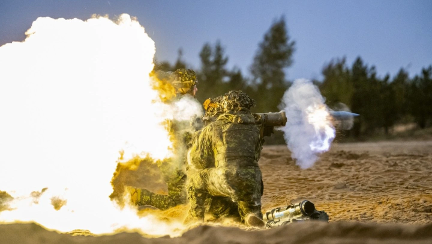
Repeated Exposure
High-BOP training exposure accumulates across training days, courses, evolutions, and careers.
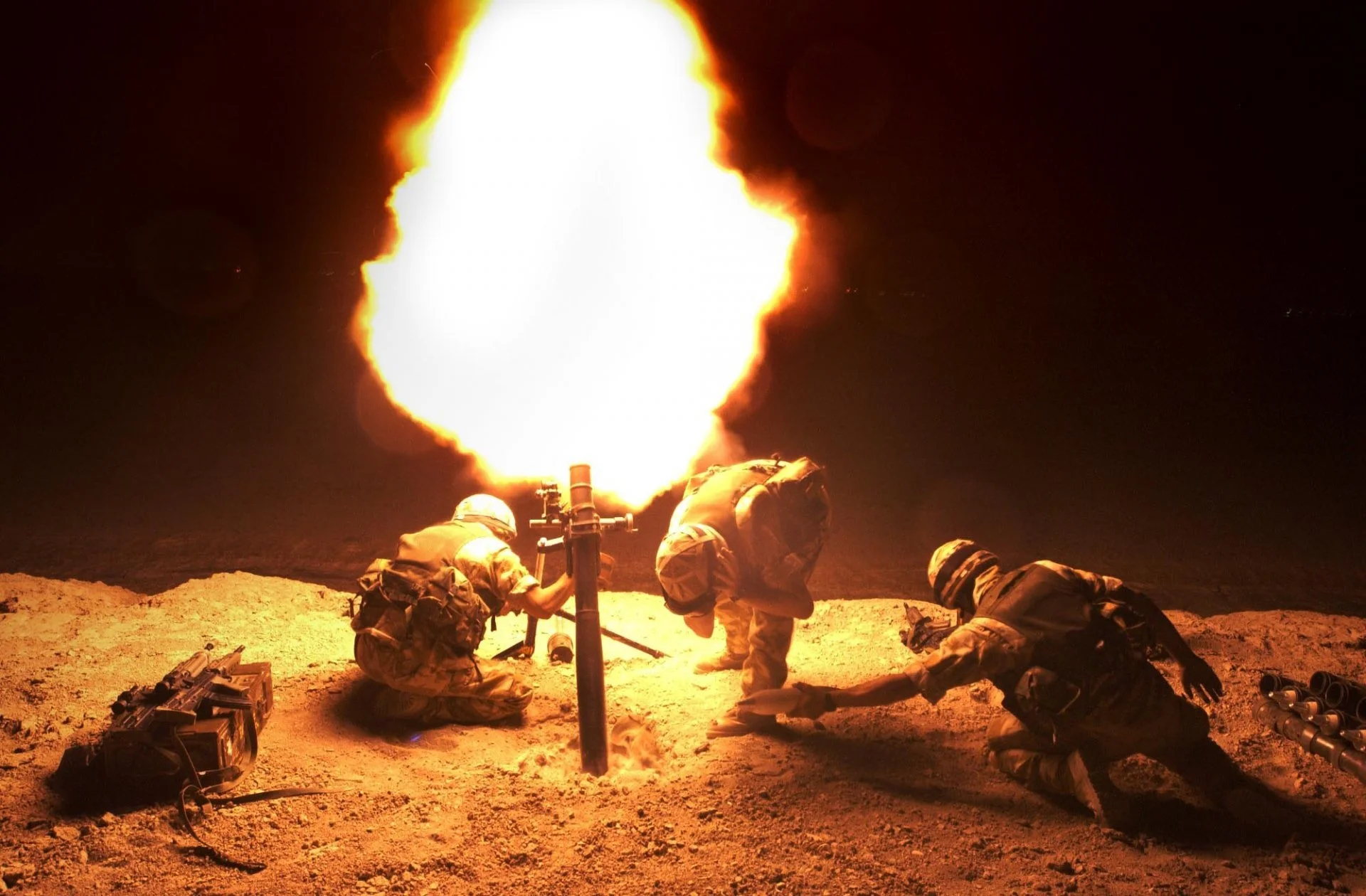
High-Dose Roles
RSOs, instructors, breachers, assistant gunners, and training cadre can carry repeated exposure across many training events.
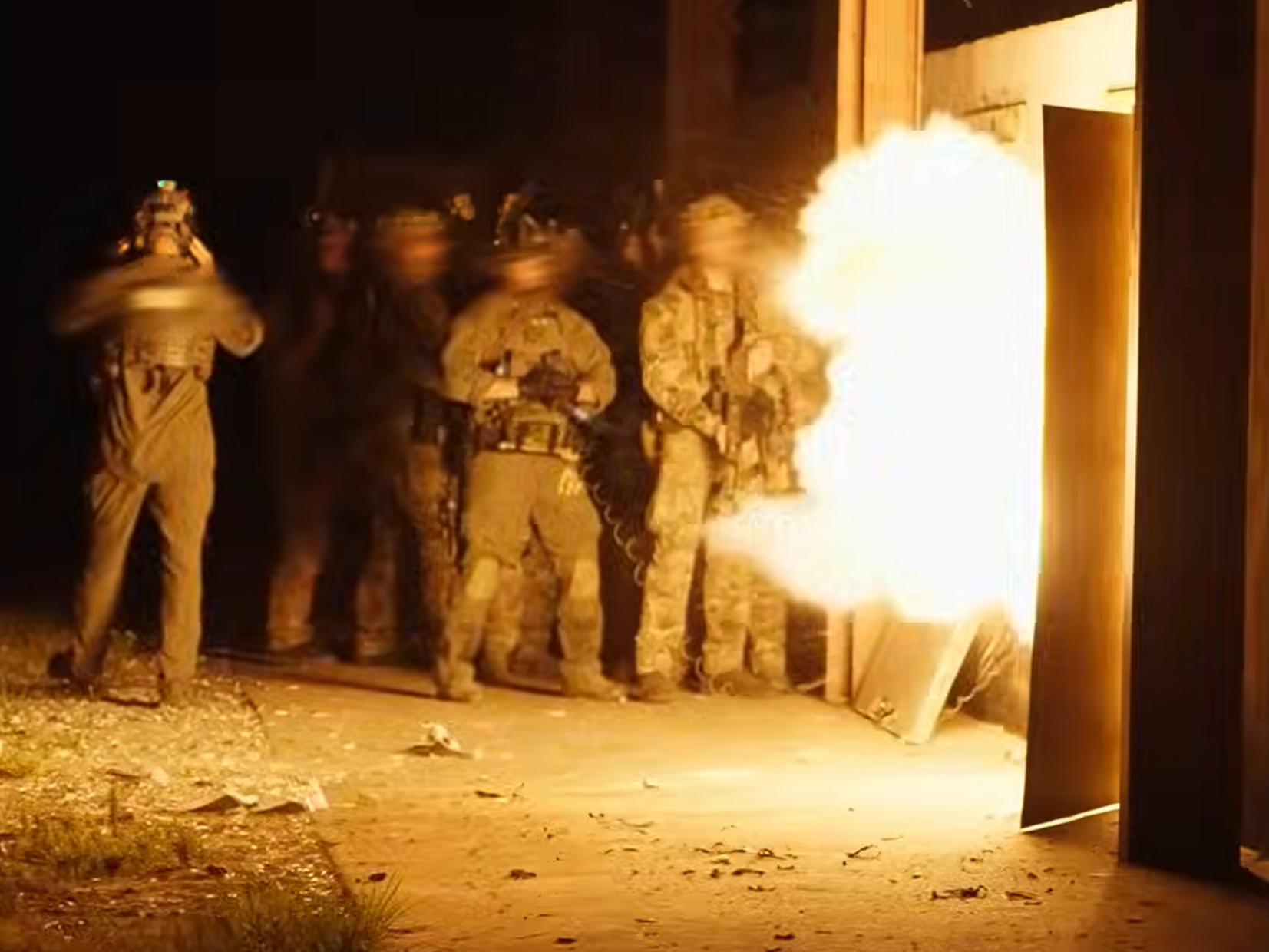
Readiness Impact
Headache, fatigue, ringing ears, sleep disruption, and cognitive delay affect recovery, performance, and readiness.
Distance-Based Guidance Has Limits
For live-fire and range environments, ALARA-based guidance and weapon-specific standoff practices help reduce unnecessary exposure by moving personnel farther from the weapon, backblast area, or firing event where practical.
For explosive breaching, CQB/C, MOUT, SOUC, and other close-quarters training environments, distance-based guidance helps establish safer standoff practices based on the training event, charge configuration, facility layout, and expected blast effects.
Both approaches are important. EBSS does not replace them.
But both are fundamentally distance-based — and distance is not always controllable where realism, safety oversight, facility geometry, and environmental variables shape the training environment.
EBSS complements ALARA, MSD, and other distance-based practices by adding physical engineering controls where distance alone is limited by training realism, safety oversight, confined-space geometry, and environmental variables.
Range Training Environments
BOP exposure can be affected by variables that are difficult to control or predict, including weapon system, ammunition type, firing position, shooter posture, RSO/instructor location, range geometry, surface materials, berms, walls, overhead cover, terrain, wind, humidity, temperature, atmospheric pressure, and repeated firing cadence.
Close-Quarters / Urban Training Environments
In CQB, CQC, MOUT, SOUC, room clearing, dynamic entry, explosive breaching, and confined-space tactical training, distance becomes further constrained. Walls, hallways, rooms, corners, charge placement, door construction, and confined or semi-confined spaces can create reflected pressure, localized hotspots, and impulse effects that simple standoff distance may not fully address.
EBSS Engineering Controls
EBSS systems complement distance-based guidance by adding physical engineering controls that reduce reliance on distance alone and support more consistent BOP mitigation across variable range, close-quarters, breaching, environmental, and facility conditions.
Engineering Controls for Whole-Body BOP Mitigation
EBSS focuses on practical mitigation at the source of repeated exposure: the firing lane, the instructor position, the shooter position, the breach point, and the hard surfaces that shape the blast environment.
Our systems are designed to help commands reduce avoidable blast overpressure exposure while preserving the realism, intensity, and throughput required for military training.
Reduce Avoidable Exposure
Mitigate blast effects where personnel are repeatedly positioned.
Preserve Training Realism
Support realistic weapons and close-quarters / urban training without impacting SOPs - standard operating procedures.
Improve Repeatability
Use physical systems and positioning cues to support consistent implementation.
Support Risk Management
Give leaders practical engineering-control options as BOP policy and tracking mature.