
COTS — CQC/B Overpressure Tile System
An integrated blast-overpressure mitigation system for CQB, explosive breaching, shoot house, and close-quarters training facilities.
SDVOSB I US Based and Manufactured
Built for
Designed to Protect
Explosive Breaching • CQB Training
Assault Team • Training cadre • RSOs • Support Staff
COTS System
EBSS’s facility-level BOP mitigation product for enclosed and semi-enclosed training environments where blast overpressure can reflect from walls, ceilings, floors, corners, doorways, and structural surfaces.
Designed for CQB, explosive breaching, MOUT, shoot house, and close-quarters training facilities, COTS combines modular overpressure tiles, behind-tile dampening, hinged blast deflection, and floor grating into a coordinated system that addresses reflected blast pathways inside the training space.
Built to preserve realistic training while reducing avoidable reflected blast-overpressure exposure.
Reflected Blast in Enclosed Training Spaces
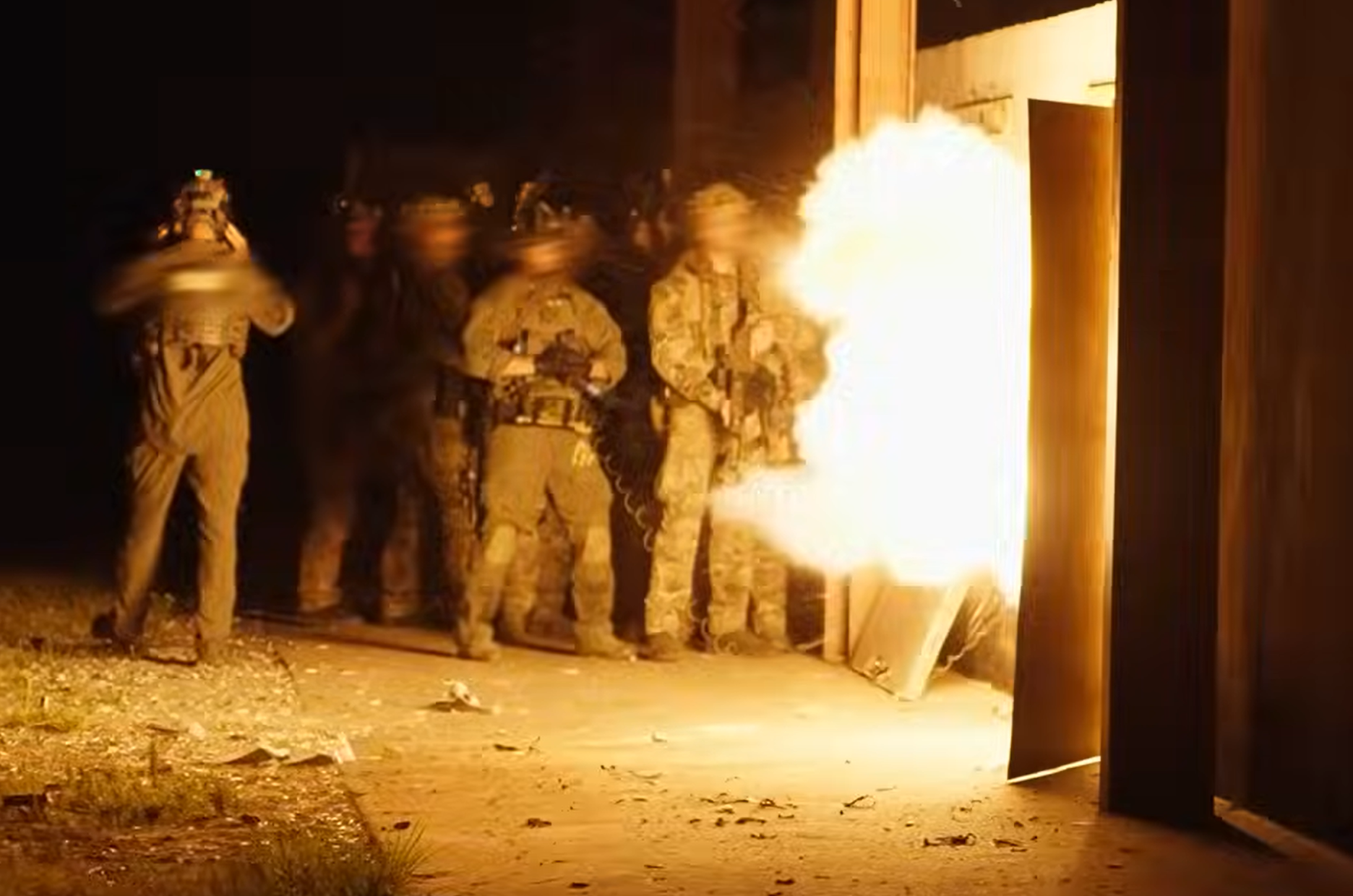
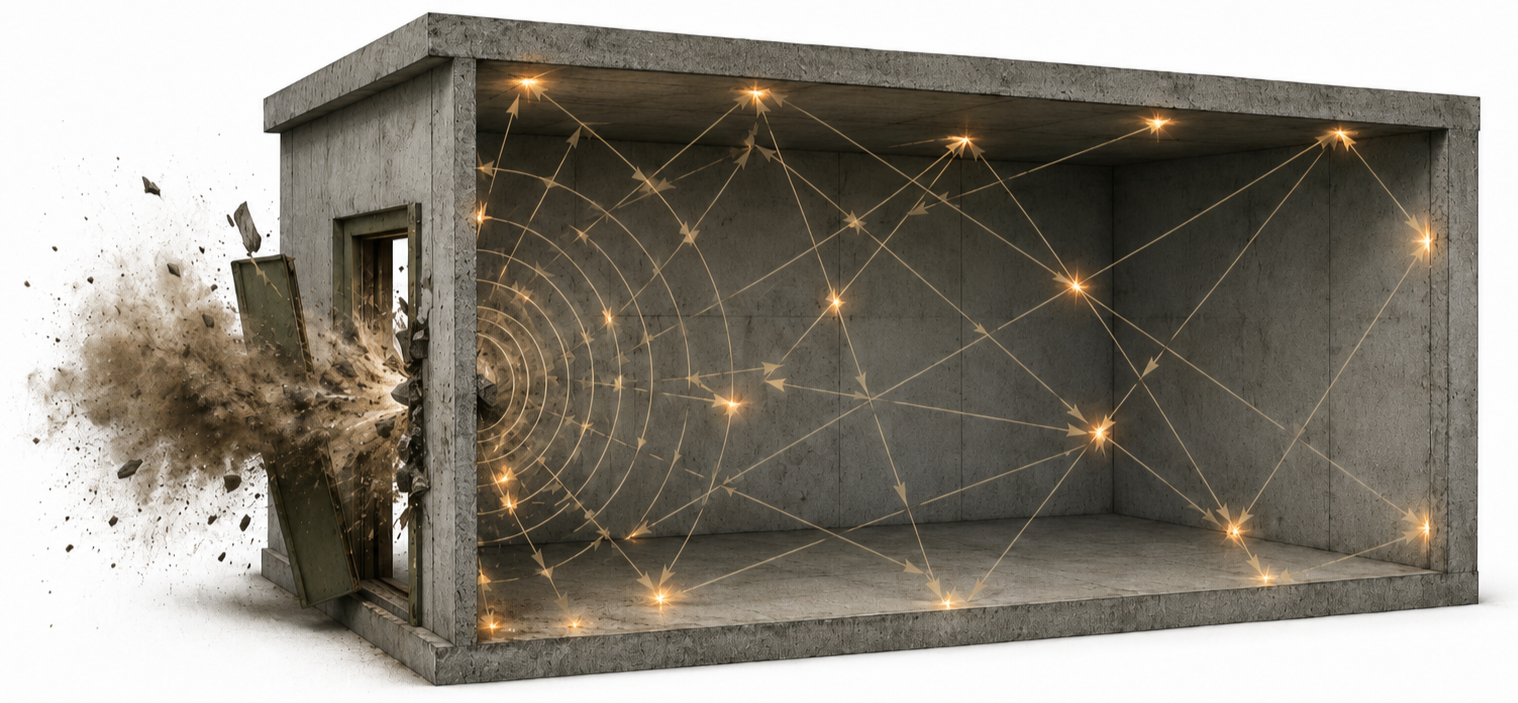
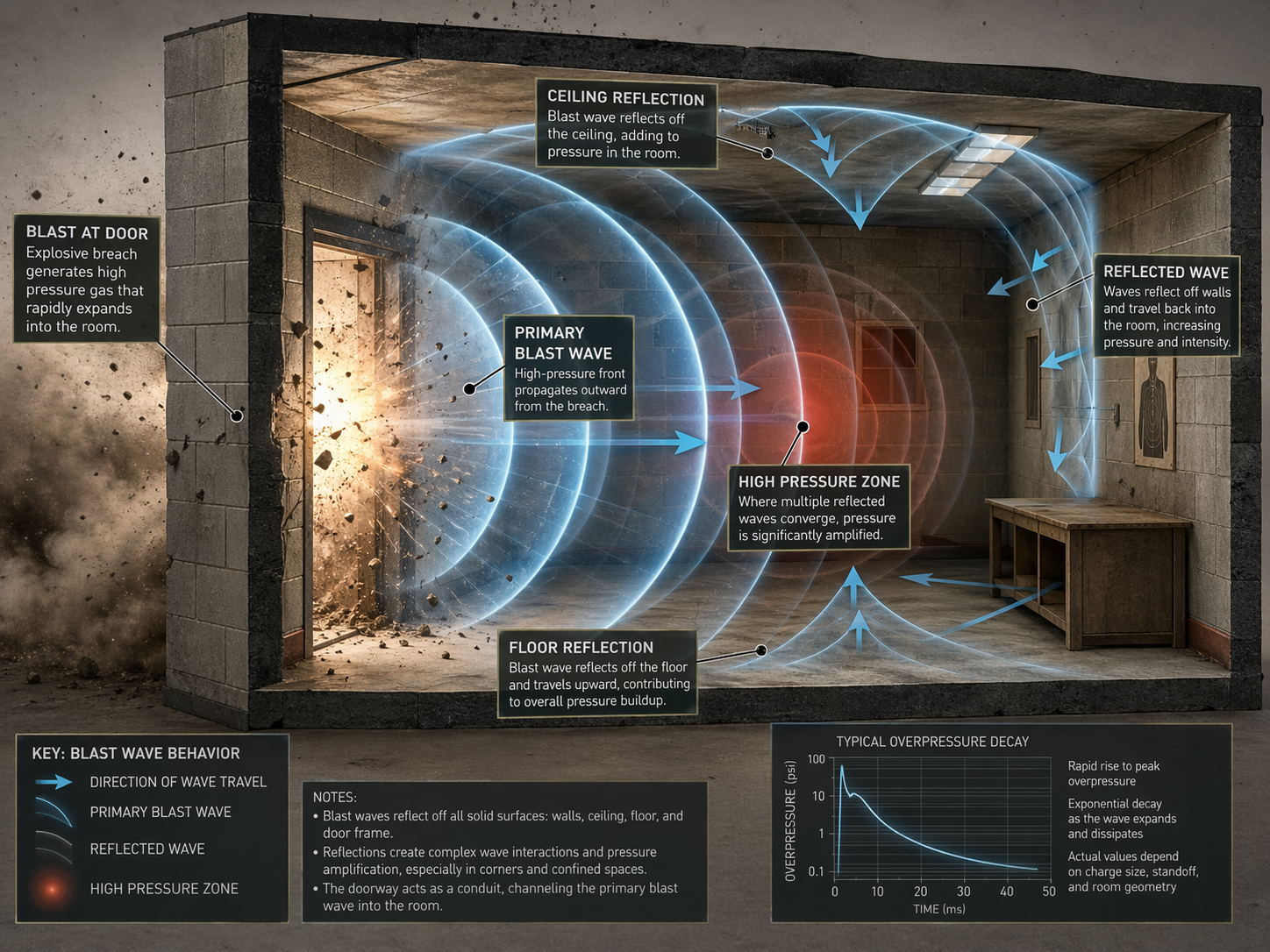
Explosive breaching charges, flashbangs, and impulse-generating training devices can produce pressure waves that strike floors, walls, ceilings, corners, doorways, and equipment before reflecting back into the training space. Room geometry creates reflected waves, localized pressure hot spots, and room-returned overpressure.
Public blast-exposure research has shown that reflected overpressure reached the 15–30 psi range.
Hard surfaces reflect pressure
Tight geometry changes exposure
Repetition increases cumulative burden
Repeated exposure affects brain health and readiness
The Department of Defense uses 4 psi as an interim blast-overpressure threshold requiring risk-management actions.
Breaching explosives are among the systems identified as producing BOP well above 4 psi level. COTS addresses this high BOP training environment.
4 psi
DoD interim threshold for blast-overpressure risk-management actions.
15 - 30 psi
Reflected BOP range in controlled explosive closed quarters training testing.
10 - 15 psi
BOP exposure range that causes contusions, hemorrhaging and lung damage.
Geometry
Rooms, walls, ceilings, corners, and doorways reflect and amplify blast waves.
COTS is More than a Tile
BTD
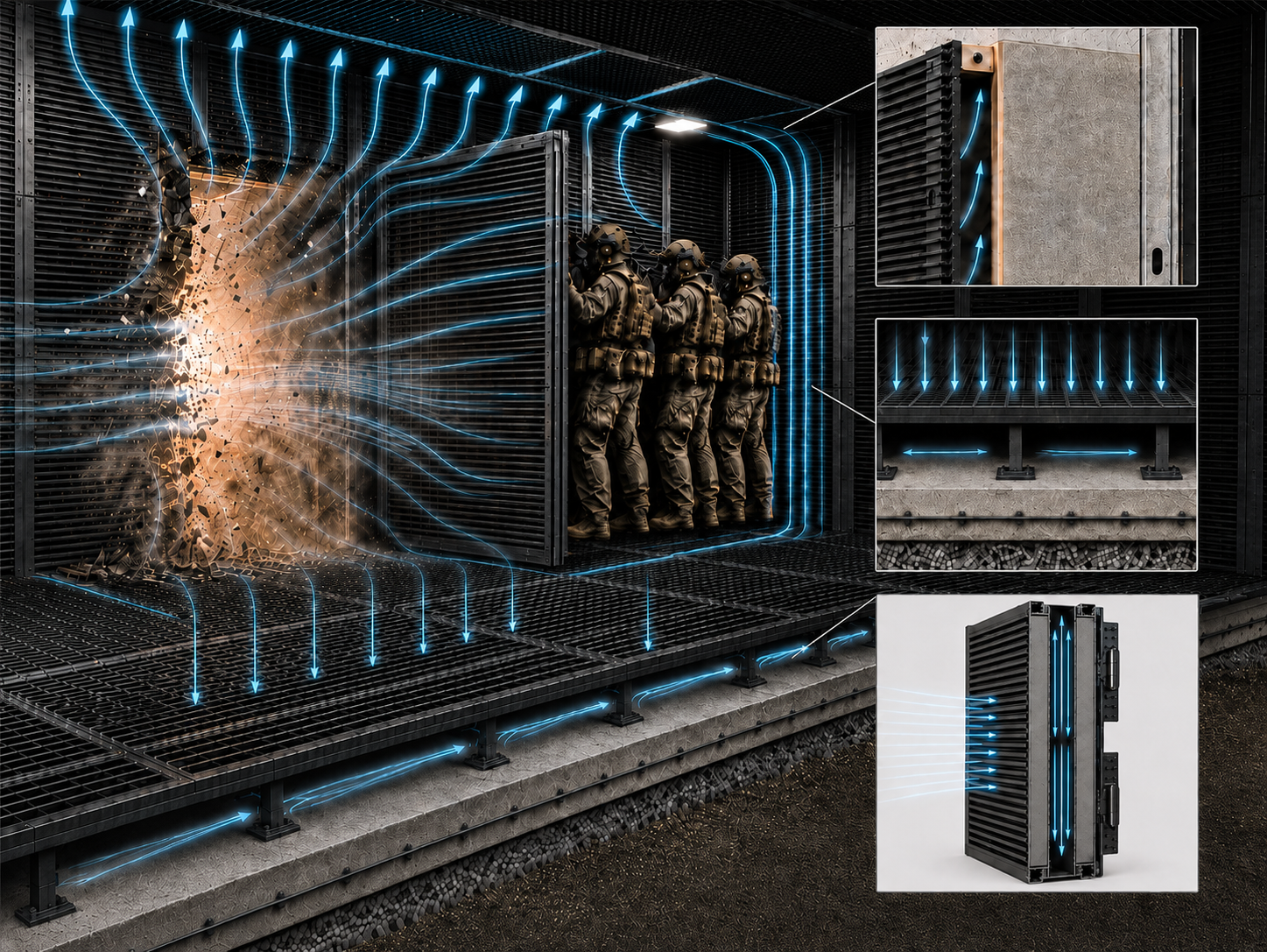
Behind-Tile Dampeners (BTD) to slow, trap, and dissipate residual pressure moving behind the tile field
ICP
HBD
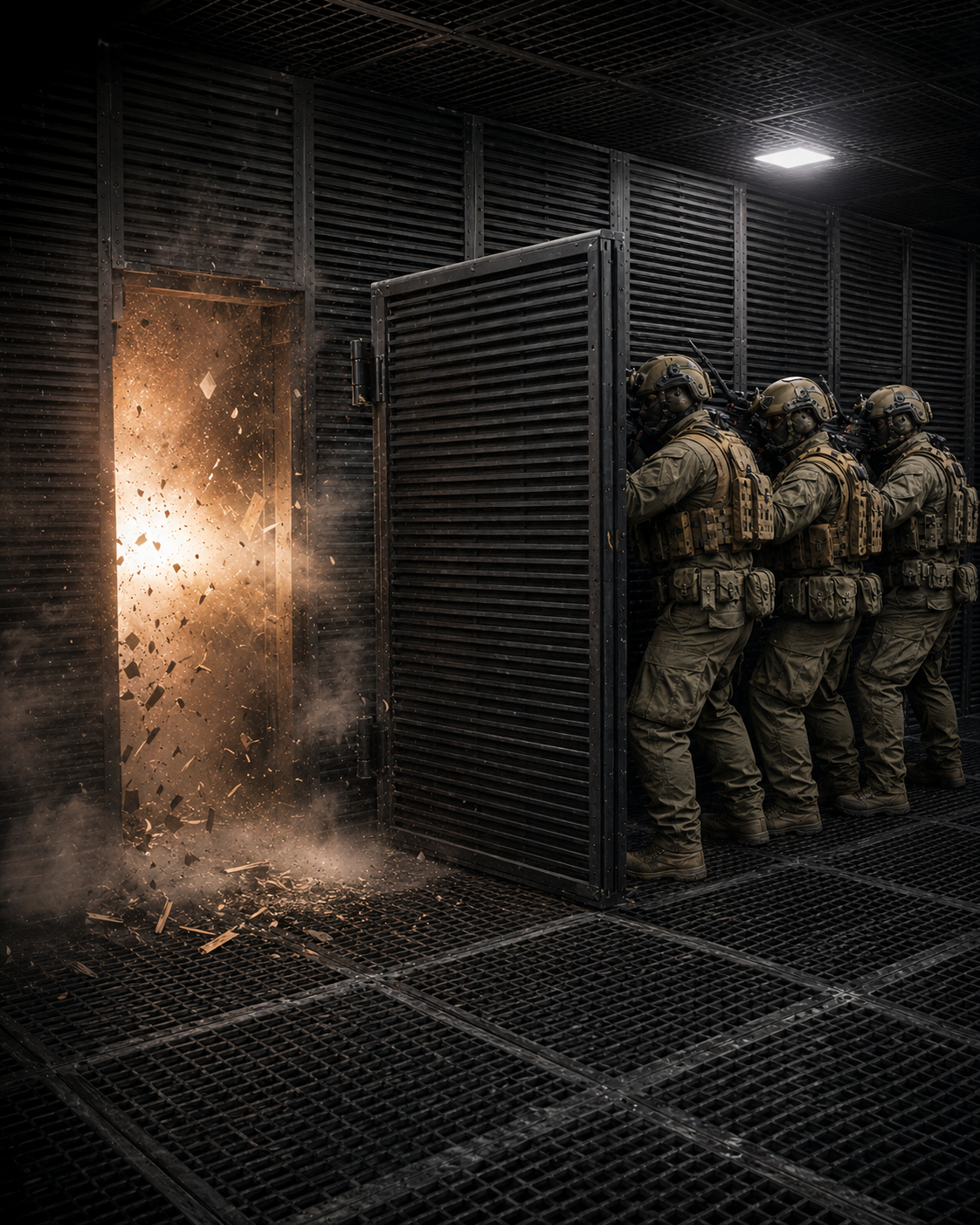
Hinged Blast Deflectors (HBD) to help shield the breaching stack during charge initiation
BFG
BOP floor grating (BFG) to interrupt hard-surface ground reflection
Integrated BOP Containment Path (ICP) to coordinate wall, ceiling, floor, deflector, and dampening elements as one pressure-management envelope.
COTS is an integrated mitigation package designed to manage blast-overpressure pathways inside enclosed and semi-enclosed training facilities.
COTS educes room-returned overpressure by capturing, redirecting, damping, and containing BOP before it reflects back into the occupied training space.
COT
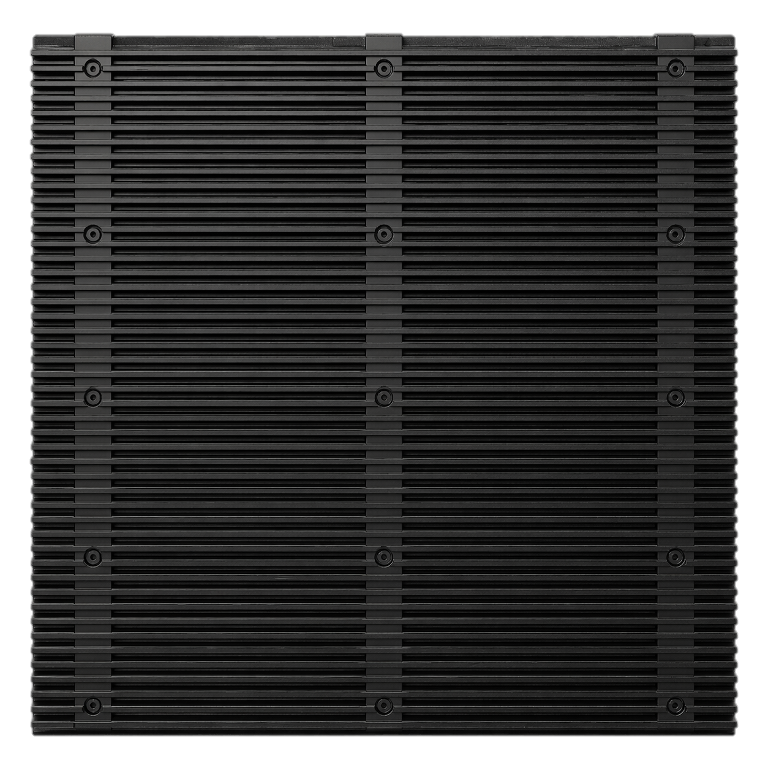
CQB Overpressure tile (COT) for walls and ceiling to interrupt direct reflection paths.
Built for CQB Training from Real Training Experience
The concept is simple: address the structure because the structure amplifies the exposure problem and mitigate the explosive breach that drives the BOP exposure.
COTS is designed to support the sequence of close-quarters and explosive breaching training without compromising the training objective.
CQB Overpressure Tile (COT)
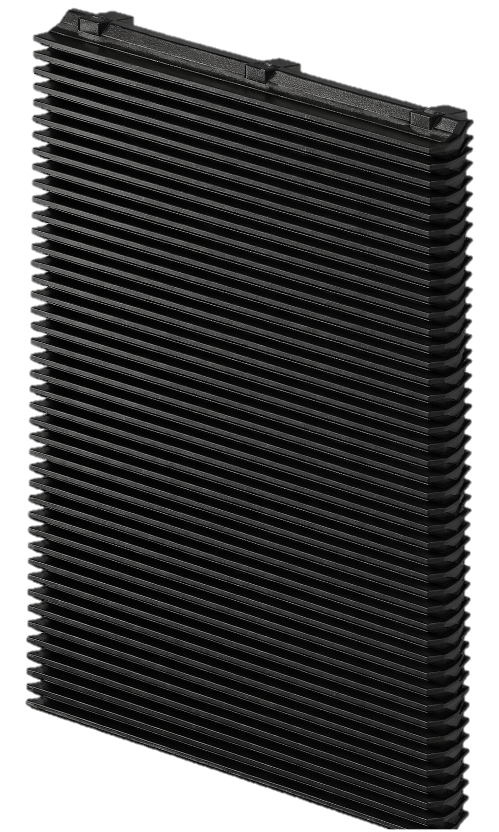
Directional Overpressure Mitigation
Surface-based engineering control
Designed for enclosed breaching environments
Intended for room, corridor, or facility application
COT redirects and dissipates blast overpressure (BOP) and also mitigates surface reflections — supporting safer conditions for all training personnel while maintaining the training evolution.
The physical structure changes the blast.
In a kill house, blast does not just move away as in open air training. It hits walls, ceilings, floors, corners, and doorways, then reflects back into the space. That makes enclosed breaching different from open-air exposure and puts more burden on the personnel training inside.
Hard surfaces reflect pressure
Tight geometry changes exposure
Repetition increases cumulative burden
Repeated exposure can affect readiness and brain health
The goal is not to make training easier. The goal is to keep training real while reducing avoidable reflected blast in the places where breaching happens most often. That aligns with current DoD direction to preserve mission-essential training while improving blast-risk management, tracking, education, and mitigation practices.
Protect readiness without softening training.
Supports realistic CQB and breaching training
Adds a facility-level mitigation option
Addresses repeated exposure concerns
Fits pilot, retrofit, or new construction
Designed to Protect
Assault Team • Training cadre • RSOs • Support Staff
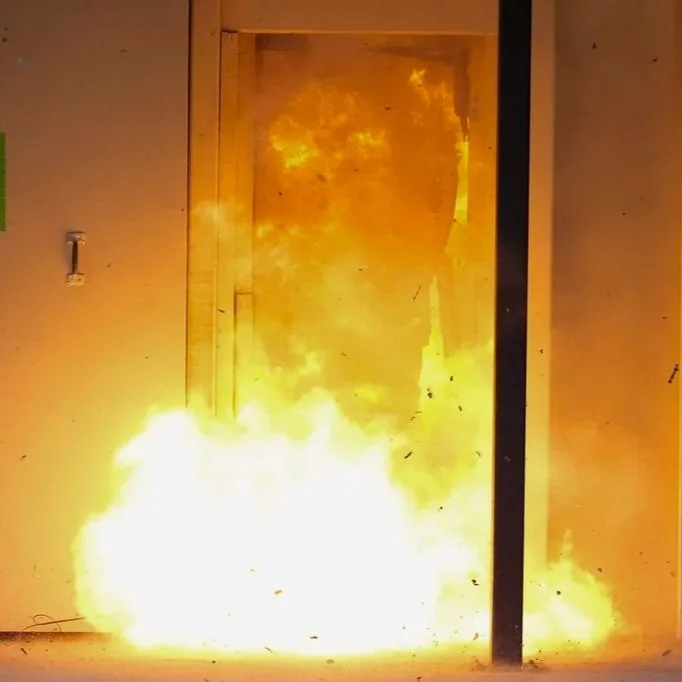
Repeated blast exposure is often described the same way: ringing ears, headaches, poor sleep, slower thinking, memory issues, fatigue, dizziness, and irritability. A warfighter can still finish the training event and still be taking damage. That pattern is reflected in current military health guidance and in breacher-focused research.
The effects are often felt before they are seen.
DoD Guidance
4.0 psi
Risk action threshold for BOP exposure.Breaching
7.3 psi
Peak pressure recorded during training.CQB BOP Amplification
9X - 12X
BOP amplification in CQB training.Reference
5.0 psi
Can rupture the eardrum.DoD has formalized requirements for managing blast-overpressure risk, and military health guidance specifically identifies breaching buildings as a relevant exposure source. COT is designed to address that problem at the structural level.
The COT Advantage
Veteran Led
Owned by Michael Eaves whom is an SDVOB/Special Operations veteran with 20+ years of experience in the military as a warfighter and as a SEAL Chief Petty Officer.
Michael’s experience includes managing SEAL training programs as an RSO with large caliber weapons.
With his experience, he has created and designed COT to enable all end users to seamlessly and safely do there job without BOP risk.
Built for Training Environments
Engineered for concrete, steel, and other hard-surface CQB structures.
Built for high-tempo training environments where repeated breaching events demand durable, dependable overpressure mitigation.
Designed to be applied within current kill houses and breaching facilities.
Mitigates reflected blast exposure so units can train in realistic environments with greater control over BOP exposure.
U.S. Based. Veteran Focus.
EBSS is a U.S.-based company committed to domestic manufacturing and veteran leadership.
Our intent is to utilize U.S.-based manufacturing partners and scale toward an enduring U.S. production footprint.
We have a commitment to our veterans and as such we will prioritize veteran employment as we grow.
BOP Insights

Request a Briefing
We offer a concise briefing for leadership and decision-makers covering the operational problem, the COT system, technology insight, and implementation paths.